Dining Hall Tea Connoisseurs
Graphic by Angie Li

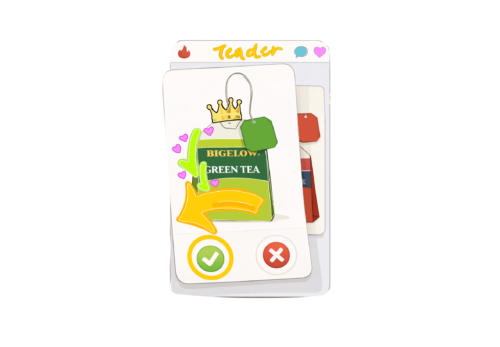
The story goes that tea was invented in 2737 B.C.E. by the Chinese emperor Shen Nong when a few leaves accidentally floated into his boiling water. Since then, it has been a quintessential part of Eastern and Western life, whether it’s a cup of black tea to start the morning or an herbal concoction to fall asleep. In Harvard College’s dining halls, students can enjoy an assortment of Bigelow-branded teas from breakfast through Brain Break.
For us, tea is an important part of wellness, essential for unwinding after a long day of classes, particularly during these chilly winter months. As such, we—two expert tea connoisseurs—joined together one afternoon to sample all nine types of tea. But first:
What is our authority on tea?
Ellie Guo: My grandfather was born in a region of China adjacent to a tea-producing province.
Cloris Shi: Coffee no longer works for me.
Cinnamon Apple
EG: As I began steeping this tea, I was immediately concerned by the bright red color emerging from the tea bag. “Julius Caesar” would have been a fitting name for this tea, as it began to look like it had been stabbed 23 times. As for the taste, I was left wondering what they did to the apples to generate the flavor in this tea.
CS: It’s long past the season to drink this tea, if there is a right season at all. Cinnamon Apple has a quintessentially fall flavor profile, but with the shade of maraschino cherries and the scent of overpoweringly sweet apple juice, it’s freakishly off-putting.
Orange & Spice
EG: I love to drink tea while reading, and this one reminded me of a line from one of my favorite novels, “The Great Gatsby.” Inspired, I felt that its flavor could be perfectly summed up in one of F. Scott Fitzgerald’s iconic lines: “It eluded us then, but that’s no matter—tomorrow we will run faster, stretch out our arms farther.” Indeed, the flavor eluded us—I could not discern any particular taste, but I don’t particularly mind that. It is truly the La Croix of teas.
CS: When melted orange-scented Yankee candle meets DayQuil, you probably get something like this tea. There was nothing natural about drinking this. Steeping it for just a couple of minutes yields water the shade of Sunny-D or Emergen-C.
Sweet Dreams
EG: If this tea had a food counterpart, it would be SPAM, because it’s just an amalgamation of various plants and herbs shredded beyond recognition. In fact, the tea itself resembles livestock feed. The taste is unremarkable, except for a slight sour note.
CS: Don’t you dare insult Sweet Dreams! Chamomile tea helps me relax and rewind, and there’s a comforting, soothing, tummy-warming effect. These days, as I am trying to wean myself off caffeine, this tea has accompanied me back from office hours in the Quad to the Yard, and from the Northwest Laboratories to the Barker Center, among other egregious treks one must make in the middle of the academic day.
Mint Medley
EG: Usually with mint teas, I feel some cognitive dissonance from its cooling sensation coupled with hot water. However, the reduced mint flavor in this blend prevents any psychological confusion. But perhaps I should refrain from being so passive-aggressive, because this tea has been a lifesaver for soothing sore throats.
CS: Hmm, this is similar to Sweet Dreams but… more awake? There’s a similar flavor profile, but mint tea does leave a chilling effect.
Raspberry Royale
EG: Tea has always been a source of relaxation for me, but the pleasant aroma of this one is painfully misleading. The raspberry scent is not overpowering and seems natural, but once I dropped the bag into hot water, I had a gut feeling that something was about to go terribly wrong. This tea has all the bad parts of a raspberry without any of the benefits—the sourness, the fuzziness, and the raspy-ness.
CS: To borrow a term from wine connoisseurs, this tea tastes—for lack of better words—“cooked.” With a smoky black hue, an acrid aftertaste, and unexpected hints of sweetness, Raspberry Royale seems to be overwhelmed by the different flavor profiles it attempts to achieve. Overall, a normal black tea ruined by an artificially fruity alter-ego.
“Constant Comment”
EG: This tea is absolutely foul. As CS and I continued sampling teas, I was struck by a lyric by The Cranberries that encapsulates my experience with the unpleasant aftertaste: “Do you have to let it linger?”
CS: Stay away from this tea. EG could do nothing but constantly comment on how terrible it is. I agree, though. It felt like someone wanted to Harvard-ify orange juice and dress it in a suit, and so fittingly, it did nothing but constantly insert itself into all our conversations.
Lemon Lift
EG: Scarred by “Constant Comment,” I dreaded Lemon Lift. However, I had made a grave miscalculation. Lemon Lift is cozy and delightful, like a warm Arnold Palmer to cheer you up during the gray winter months.
CS: Lemon Lift really does make me happy after the horror of these past teas. With a slightly acidic aftertaste and sweet scent, I’d gladly take another cup.
English Teatime
EG: After the debilitating experience of “Constant Comment,” the rich color and pleasant smell of this tea allowed me to empathize with the founding members of the American Revolution. I, too, would declare independence if this delightful breakfast blend were unjustly taxed. Though I did perceive a slight bit of astringency, it would be a shame to let it go to waste by dumping it in the Boston Harbor.
CS: Not to be all “natural and organic” (I’m from L.A.), but this tea tops my list for a simple reason: its sole ingredient is “black tea.” I like to pair this with iced vanilla oat milk for a simple milk tea. Makes a charming little morning or mid-day pick-me-up.
Earl Grey
EG: I might be biased towards this tea because it shares initials with me. In the Chinese classic novel, “Dream of the Red Chamber,” one of the main characters says, “A cup of tea is for tasting, two cups of tea is for quenching thirst, and three cups of tea is for cows and mules to drink.” Though this character might associate me with livestock, I would still drink three cups of this tea—perfectly versatile and easygoing.
CS: It’s hard to mess up Earl Grey, and Bigelow somehow found a way. It’s a bit slick, a bit oily, and incredibly mediocre.
Final Thoughts?
CS and EG: We would now like to present our rankings and crown the best dining hall tea.
In conclusion, HUDS provides a respectable variety of teas. We hope that, in shedding light on all nine teas, we can guide you in choosing which teas to add to your daily wellness routine, and which ones might just as well exacerbate your worries. Though some may have a dubious flavor profile, the ritual of waiting for tea to steep and then drinking it slowly is nonetheless a moment of reprieve in our busy lives. Whether as a hand warmer or a throat soother, tea plays a critical role in making winter a kinder season for all of us.
Ellie Guo ’29 (eguo@college.harvard.edu) and Cloris Shi ’29 (clorisshi@college.harvard.edu) erroneously believe they are funny.