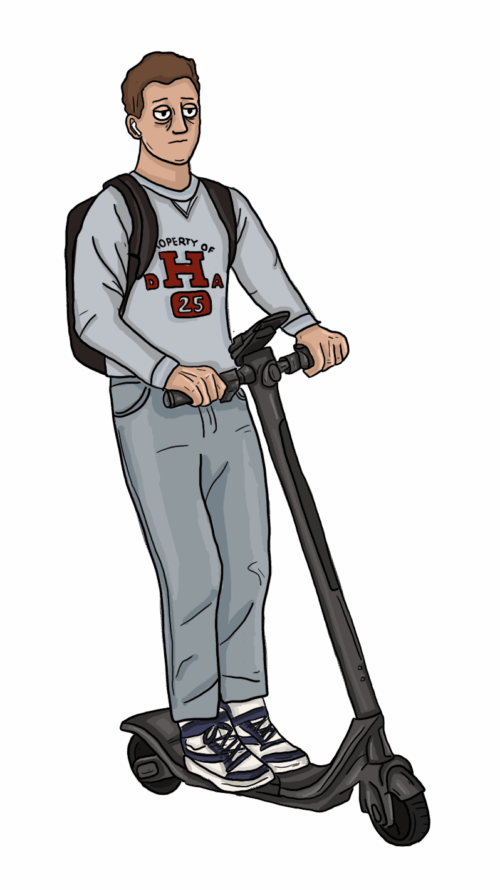
Hallucinations of a Sleep-Deprived Athlete
Graphic by Miranda Chao Hwang

Every student at Harvard has a different sleep schedule. But whether you’re an early bird or a night owl, there is a way to pick a class routine that fits your preferences while managing to survive the semester and remain relatively sane. Finding time to take a quick nap when exhaustion hits or schedule a break between classes and meetings are an important part of the day for many busy students.
Unfortunately, student-athletes do not get this luxury. Instead, there is an expectation never to miss a practice or team activity, even if that means skipping required classes or having to schedule a dreaded 9 a.m. There’s no option to take a 3 p.m. class so you can sleep in the whole morning. Inevitably, this leads to unavoidable disillusionment and exhaustion, and the hallucinations start.
The Impending Alarm
Nothing’s worse than constantly waking up in the night from dreams of your aggressive alarm ringing for morning practice. The evening is spent waking up in a panic to check the time, followed by counting down the hours you have left to try and sleep. When the time finally comes to drag yourself out of bed, you throw sweats over your pajamas and make the trek to the locker room, having barely slept a wink. The epic journey wakes you up ever so slightly, as the wind leaves your eyes streaming with tears and your hair with a natural but questionable blowout.
The Line Between Intoxicated and Tired
Time passes in strange ways between waking up and walking into the Harvard Palmer Dixon gym. Trudging through rain and snow leaves you questioning your life choices, though the post-workout adrenaline makes it all worth it. That is, until the adrenaline wears off, and your lack of sleep from the night before kicks in. The day does not stop when classes finish, as many teams have two practices a day; that means heading back to the locker room for round two even more tired than before. The feeling of putting on your practice gear for the second time builds character, and the battle with sleep hits during an early-evening film session.
The Inadvertent Power Nap
75 minutes in a Science Center lecture hall never go by quickly. Battling heavy eyelids, student athletes fight the urge to drift off to their professor’s voice. Not only is it startling to wake up after aggressively snoring in a 600-person class, but it is also extremely frustrating. Classes are an important opportunity to learn and help students excel off the field, but the exhausting commitments of life as a student-athlete affirm the experience of classes as chores rather than opportunities.
The Coffee Curse
Never underestimate how easy it is to fall into a cyclical trap of consuming caffeine to stay awake, while willfully ignoring the resulting inability to sleep. Before you know it, it’s 3 a.m., and you are questioning every decision from the day before. The lack of emphasis on striving for good sleep habits is alarming. Instead of celebrating an early night, student-athletes glorify surviving a 32-hour stint wide awake, keeping the hidden consequences quiet. Many must decide between sacrificing work or sleep; the typical answer to this is to always prioritize academics over recovery. This same ultimatum exists in deciding if it is more beneficial to go for early-morning physical treatment or to salvage an extra 20 minutes in bed.
The Imaginary Meal
When you pass out after morning lift for a quick power nap before your 10:30 a.m., only to wake up incredibly disoriented and questioning what the purpose of life is, know that other student-athletes have faced those same feelings. We also relate to the hunger hitting when you have missed breakfast; the rest of the day will now be spent consistently fantasizing about a fresh Black Sheep Bagel before your dreams are crushed by a below-average HUDS meal.
Sleep is often undervalued, which is why it’s so important to remind each other that rest is just as valuable as endless assignments and unrealistic tasks. The next time you interact with a tired student-athlete, give them some grace if they offer you an awkward reaction, or suggest grabbing an evening coffee as an activity. It is probably just another sleepy hallucination.
Tilly Butterworth ’28 (mbutterworth@college.harvard.edu) experienced a few hallucinations while writing this.