Harvard Ghost Stories
Graphic by Katharine Weiner

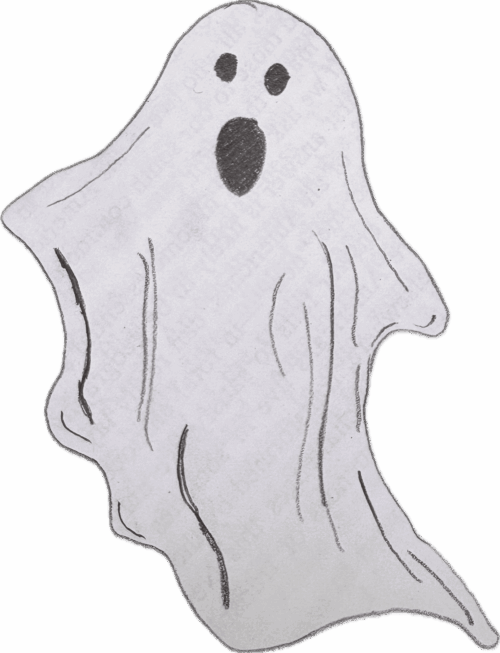
Students in Hollis Hall once received a chilling ultimatum: they had 36 hours to evacuate their rooms, or face a supernatural punishment. The message, purportedly from the ghost of a Revolutionary War soldier, appeared in the winter of 1940 and claimed that the spirit was tired of living in the attic and wanted the entire building for himself. The 36 hours passed without incident, but to this day, no one knows who left the message. Even now, students occasionally report hearing disembodied footsteps and knocking, or feeling sudden, inexplicable chills.
Analyses of folk tales such as this can provide valuable insight into a culture’s values and beliefs, and Harvard’s ghost stories are no exception. From George Washington’s Continental troops lingering in Hollis Hall to apparitions of famous Harvard residents past, these haunting tales share a common thread: they are laced with reminders of the prestige, accomplishments, and wealth that have historically defined our school’s culture.
Few institutions as old as Harvard are without their spooky stories. Legends tell of the ghosts of departed faculty roaming colleges at Oxford and Cambridge, and of a murdered student said to haunt Yale’s campus. Like these other age-old universities, Harvard’s extravagant architecture and centuries of rich history make it a prime site for more than its fair share of paranormal activity.
When these stories circulate, it rarely seems to be for their fright factor. Indeed, if you asked the average Harvard student if they truly believed in any of these tales, they’d likely laugh in your face. Instead, these stories tend to serve as curiosities—pieces of “insider” Harvard lore shared among students, marking the boundary between those in the know and the public. They serve to separate students of elite higher education from the rest of society.
Students’ attitudes toward these legends are merely a symptom of a larger cultural phenomenon that has long defined this campus. The one thing that all Harvard students have in common is that they were accepted into one of the world’s most prestigious and exclusive institutions. Upon arriving on campus, however, they quickly realize that this accomplishment no longer sets them apart from their peers. It is for this reason that so many Harvard students seek to further differentiate themselves by attempting to create and access spaces that are often exclusive for exclusivity’s sake, from final clubs to Crimson Key. On this campus, there is a prevalent desire among students to constantly prove that they are the best of the best. Our attitude towards ghost stories, I argue, is a side effect of this; being in the know about Harvard’s lore and lesser-known stories allows students to prove, if only to themselves, that they truly belong here.
One of the most enduring ghostly tales centers on Widener Library, one of the most well-known buildings on campus. Anyone who has visited Widener has likely found themselves in the background of a tourist’s photo or overheard a tour guide recounting how Harry Elkins Widener perished aboard the Titanic. What visitors may not know, however, is that his mother, Eleanor Elkins Widener, is said to haunt the library’s halls. During renovations in the early 2000s, Harry’s portrait was removed from the walls, and soon after, chunks of plaster began to fall from the ceiling. Employees blamed the disturbance on Eleanor’s spirit, angered by the perceived disrespect to her son’s legacy. When the portrait was replaced, the supernatural activity ceased.
As with many aspects of the school, Harvard’s ghost stories reinforce the University’s prestige. Widener’s legend harks back to his family’s donation and reminds us of the immense wealth contained in that building alone—almost $80 million in today’s currency. Tales of Revolutionary War soldiers haunting Hollis Hall and Wadsworth House remind students of Harvard’s deep historical roots. Few schools can claim to have hosted Revolutionary troops, and so at Harvard, Halloween provides a convenient excuse to casually reference George Washington’s time on campus. The incorporation of these legends into everyday conversation serves as a sort of self-validation, an opportunity for students to remind themselves and others that they attend Harvard.
Washington is not the only notable name said to linger. Lowell House is rumored to be haunted by Amy Lowell, the Pulitzer Prize-winning poet and sister of the house’s namesake. Residents have reported smelling cigar smoke near her portraits, and even seeing full-body apparitions. These stories keep the Lowell family’s legacy alive, connecting current students to Harvard’s storied past.
And as with much else at Harvard, its ghost stories function as subtle symbols of status, reinforcing the prestige that has defined Harvard’s very identity since its establishment. Through the creation of myths, famed universities like Harvard help create their idealized image—one of wealth, prestige, exclusivity, and rich history. With recent efforts to promote values of equity and inclusivity, it will be interesting to see how these ghost stories evolve.
Lucy Duncan ’28 (lduncan@college.harvard.edu) writes Forum for the Independent.