Q&A with Dr. Robert Waldinger and Dr. Ellen Langer
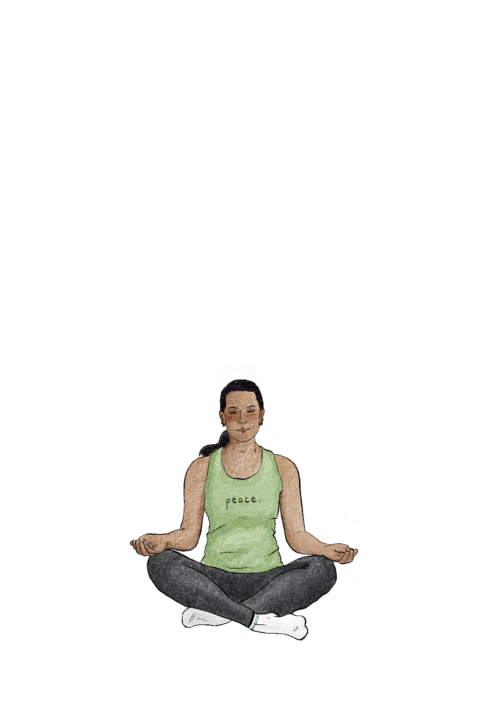
Graphic by Madison Krug

“How should I lead a happy and fulfilling life?”
This question has plagued humanity for centuries, including many of the ambitious students who have called Harvard College home. Luckily for us, prominent figures in psychology have been developing answers to this mystery since the 1930s. To gain some insight, the “Harvard Independent” spoke with two subject-matter experts: Dr. Robert Waldinger ’73 and Dr. Ellen Langer, both of whom shared important takeaways from their many years of research.
Robert Waldinger
Waldinger is a psychiatrist, psychoanalyst, Zen teacher, and the Director of the Harvard Study of Adult Development. Beginning in 1938, the study has tracked the lives of 456 men from low-income neighborhoods in Boston and 268 Harvard graduates. More recently, Waldinger has begun studying the children of the initial participants. According to the project’s website, the goal of the study is to examine the “psychosocial variables and biological processes from earlier in life predict health and well-being in late life (80s and 90s), [and] what aspects of childhood and adult experience predict the quality of intimate relationships in late life.” In addition, they look into “how late life marriage is linked with health and well-being.” The study also questions how late-life experiences, including marriage, impact the above-mentioned factors.
The “Independent” asked Waldinger about what he learned from his research:
What is happiness to you?
RW: There’s research on this that there are two big categories of happiness. One is called hedonic well-being. It comes from hedonism. And it’s really that question of “Am I having fun right now? Am I happy now?” … That’s the kind of happiness that goes up and down all day long for some of us. And then there’s another kind of happiness called eudaimonic well-being. It’s from eudaimonic, from the Greek, and it’s that sense that life is basically good, and it’s basically good even when I’m having a bad day. So it’s that kind of ongoing, enduring quality, different from the up and down quality of hedonic wellbeing.
So when we think about happiness, we really want to think about both kinds. Most of us want some of both kinds, and some of us prioritize one type over another.
What do you think are the most important takeaways from the research or work that you’ve done?
RW: One is, and this won’t be a surprise, really take care of your body like you’re going to need it for 100 years. Really take care of your body. And what that means is getting preventive health care, not becoming obese, not abusing alcohol or drugs, and getting exercise regularly. All this sounds like something your grandmother would tell you, but it’s really true, and it makes huge amounts of difference in how you feel throughout your life, but also how healthy you stay. So taking care of our physical health is essential.
And then the second one is this finding that we’ve had over and over again in our study, that relationships are so important to health as well as happiness. So good relationships, healthy relationships, relationships that aren’t filled with conflict, that those [attributes] are essential for helping us both weather the hard times that life brings to everybody, and to bring a lot of joy into our lives and a lot of opportunities into our lives.
How would you describe a good relationship, beyond one in which there isn’t a lot of conflict? How would you characterize that dynamic?
RW: So first of all, it’s really important to remember that there are always disagreements in any relationship. So what I mean by not a lot of conflict is really acrimonious conflict where people are really fighting and being mean to each other, and people are feeling like I have to win and you have to lose. Those are the kinds of relationships that really break down our health as well as our happiness. But the best relationships are relationships where there’s conflict, and we figure out how to work with conflict. How to work things out so that neither person feels disrespected, and we find a way to go forward with a disagreement.
But those are the best things, and ideally relationships where there’s give and take, where there’s mutuality. The best relationships are where each person feels like they get a lot and they give a lot, which is different from those relationships where you feel like you’re the one doing all the giving or all the taking; those are pretty unstable. People actually get tired of those after that.
Ellen Langer
Langer is a professor in Harvard’s Department of Psychology and the first woman to receive tenure in the Department. She is recognized as “the mother of mindfulness,” having authored the bestselling book “Mindfulness” and conducted extensive research on the subject. Langer’s most notable research includes The Counter Clockwise Study, in which Langer tracked whether a retreat that mimicked the conditions of 1959 could positively physiologically affect men in their seventies and eighties. The results found that the participants’ performance in both physical and mental tests had improved after just one week, suggesting that aging is more complex than simply the passage of time.
You talk a lot about mindfulness in your work. So what is mindfulness?
EL: Probably the best way to understand mindfulness is to start with mindlessness. After decades of research, it’s become clear to me that virtually all of us are mindless … When you’re mindless, you’re no different from a robot, and robots don’t have choices. Robots can’t be happy. None of us should be robots. So how do we become robots? … I believe it’s because we’re taught to seek certainty, and once you think you know something, you no longer pay any attention. If you knew what I was going to say next, why would you listen to me? But it turns out, since everything is always changing, everything looks different from different perspectives. Everything is new. When you know you don’t know, then you naturally tune in.
So the best way to become mindful is there are two steps to either top down or bottom up. Top down is to appreciate uncertainty … If you know you don’t know, then you pay attention. Another way to get to this is bottom up. So if you actively notice new things about the things you think you know, you’ll see that, gee, you don’t know them as well as you thought you did.
So if you just look around your room, for instance, and notice three new things, and you walk outside and notice three new things, and notice three new things about somebody you think you know well, and all of this will lead you to that same place of realizing everything is always changing. So what we need to do is learn how to exploit the power of uncertainty, which goes against the way most kids, most students, study to learn absolute facts.
Now it turns out that as we’re actively noticing new things, which is the essence of being mindful, the neurons are firing. And decades of our research has shown that’s literally and figuratively enlivening. So in early studies, we teach elderly people to be more mindful, to notice new things. They live longer.
When you’re noticing new things, people find you more trustworthy. You seem more authentic and more and more attractive. When you’re mindful, you bring something special to the things that you’re doing. So the products that you’re creating seem to bear the imprint of this mindfulness. Everything is better. And if you think about it, if you’re going to do it, why do it if you’re not there for it? So this is the, essentially the key to our health and well-being.
What do you think are the most important takeaways from the research you have conducted?
EL: To be the kind of person you want to be, to be happy and healthy in many ways, is a lot easier than most of us assume.
What is mind/body unity?
EL: Most people were brought up implicitly, not explicitly—I don’t think your parents said to you, “So you have a mind and a body”—but everything that you learn suggested this dualism. And when you have this dualism, then you’re stuck with the problem of how do you get from this fuzzy thing called a thought to something material called the body? And everybody has experienced this. You see somebody regurgitating, and then all of a sudden, you yourself feel like you’re going to vomit.
Nothing’s happened. Or a leaf blows in your face. And before you realize it’s just a leaf, your pulse and blood pressure increase because you’re a little frightened, and say, “Oh, it’s only a leaf.” So your thoughts are affecting your body, and so to me, I said to myself, “Mind, body, these are just words, and even if it’s just for heuristic purposes, let’s put the mind and body back together as a single unit.” Now, all the control becomes available.
We have many, many studies, one of the most recent was done with my graduate student Peter Aungle, and we inflict a wound, a minor wound, because I’m not a sadist, nor is he, and even if we were, the IRB [Institutional Review Board] wouldn’t let us do it, but it’s a minor wound, and people individually are in front of a clock. Unbeknownst to them, the clock is rigged. So for a third of the people, it’s going twice as fast as real time. For a third of the people, it’s going half as fast as real time. For a third of the people, it’s real time.
Now, most people would assume that the wound is going to heal when the wound heals, but that’s not what we found. The wound healed based on clock time and perceived time. So we have many, many studies, most of them are described in my last book, “The Mindful Body: Thinking Our Way to Chronic Health,” and in study after study, we find that our minds are far more powerful in bringing about the outcomes that we seek than most people realize.
What do you think are some easy ways we might improve our lives daily?
EL: What we need to do is become more mindful to not run from not knowing, but to understand that, since everything is always changing, we can’t know. Nobody really knows, and then everything becomes potentially interesting … I believe that what we’re pursuing is a happy life. And as I said, now it’s not that hard to be happy. Stress is psychological. Events don’t cause stress. What causes stress are the views we take of events. If we open up those views and are more mindful, we have many different ways of understanding things. The stress will dissipate.
…
Waldinger and Langer both challenge the notion that physical well-being and happiness are fixed. Instead, they propose that humans have much more control over their lives through the choices they make on a daily basis. Waldinger’s research focuses on the impact of human relationships: by developing healthy relationships, people can increase their happiness. Langer, on the other hand, has found that humans can reclaim control by realizing that their mindset has physical outcomes. She explains that in shifting from mindlessness to mindfulness, individuals can improve how others perceive them, as well as increase the length and quality of their lives.
Julia Bouchut ’29 (julia_bouchut@college.harvard.edu) has noticed three new things in her room today: the peeling wall, a scuff mark, and the creaking floor. She regrets not filing a damage report in the fall.