“Unbound”: Ghungroo 2026
Graphic by Zoe Li-Khan

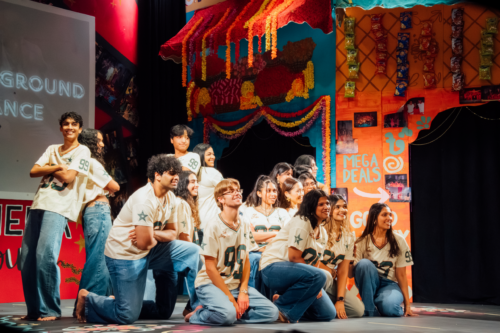
From Feb. 19 to Feb. 21, at the Agassiz Theatre, Harvard Undergraduate Ghungroo celebrated the beauty of South Asian culture and its enduring spirit. Bringing together over 300 students for Harvard’s largest student-run production, “Unbound”—this year’s theme and show title—celebrated the collaboration and community behind each creative act in the almost four-hour-long show. Split into three acts, Ghungroo delivered contagious excitement and enthusiasm from both the performers and audience members, showcasing a variety of dances, skits, and other visual and musical performances.
Originally founded by Harvard College’s South Asian Association in 1988, Ghungroo is an annual student-run showcase and tradition. This year, three of the four shows sold out, with Saturday night’s tickets gone in a record three days after going on sale.
Under Executive Directors Arya Prasad ’27, Drima Patel ’27, and Salini Pillai ’27, “Unbound” featured a remarkable six skits, five spoken word recitations, five musical performances, and 19 dance acts. The different performances flowed together, varying from skit to spoken word to music and even runway modeling, keeping the audience laughing or clapping along.
“[‘Unbound’] is about allowing each and every one of us to move freely, guided by care for one another,” explained the Executive Directors in the show’s playbill. “[It] is a celebration of the many ways people show up, contribute, and create together … Even with the various acts and diverse performances, Ghungroo is a collective act that brings together creativity and culture.”
Executive Producers Karan Shah ’27 and Saanvi Malkani ’27, who also serve as Co-Presidents of the South Asian Association, oversaw all backstage logistics, publicity, and organization to lead the performance. Both have grown through the ranks of Ghungroo since freshman year.
Shah alluded to hours of rehearsals and logistical planning that went into the massive undertaking that is Ghungroo. Over 29 regular choreographers and 22 senior choreographers orchestrate each dance alone. “There is so much work that gets put into running a show—in terms of painting each set, in terms of choreography, dance, to see how the acts actually come out one after another, right to get the microphone ready for every eye.”
The first two acts featured a variety of traditional dances, acts, skits, singing, and even modeling, followed by the third act, which was marked by seven senior dance performances. Traditional dances and music, including Classical Dance, were intertwined with performances with Bhangra, Harvard’s undergraduate competitive South Asian dance team, as well as more contemporary styles like South Indian Dance. Skits, including “Ghungroo Weekend Update,” “Dancing with the Desis,” and spoken word, were scattered throughout the night, touching on themes of identity, relationships, and even politics—all through a South Asian lens.
With South Asia accounting for about 25% of the world’s population, Ghungroo’s 19 dance performances reflected a wide range of cultural or regional influences. Choreography based on existing dance styles included Classical, Cinema Pop, Diasporic Fusion, and more. Considering many areas of South Asia boast their own robust artistic flair, Ghungroo also features dances entitled “Punjabi,” “Nepali,” and “South Indian,” to name a few. Each reflected a different part of the immensely vast South Asian heritage and styles—a whirlwind of red dupattas, iconic Bollywood songs like “Ringa Ringa,” and the rhythmic clack of painted dandiya sticks dazzled the evening.
“Ghungroo looks at all regions and countries of South Asia. It looks at all types of dance … it looks at all types of comedy,” Shah explained. Classical styles like Kathak and Bharatanatyam shared the stage with influences such as in Diasporic Fusion.
The sets are a hallmark of Ghungroo—and are all student-created. All performers contribute to building and painting the lively stage, which is a work of art itself. From the stage floor to the walls, the sets blended visual arts, sculpture, and other physical elements that heightened the cultural atmosphere. This year, Ghungroo chose to theme its set as a South Asian market. The set included a “Bangle Stall,” featuring real Indian bangles and a 3D “Snack Wala,” nodding to scenes commonly found while roaming the streets of a South Asian city.
Ghungroo’s tech team further enhanced the show experience by bringing all the lighting and visual effects to life. “There’s so many people, and so [many] things happening behind the scenes that you might not see but [should] appreciate,” Shah added.
Shah and Malkani emphasized the uniqueness of the Ghungroo community in their address to the audience at the end of Act 1, highlighting the special bonds formed between all members involved as they worked together to create a spectacular performance. That enthusiasm and love for one another and the South Asian and diaspora culture were evident throughout the night, both onstage and off.
As the performers concluded their segment, whether it be dance or a skit, smiles and laughter erupted on stage. They embraced each other, ran to congratulate one another off stage, and supported the other performers and groups. Even clearer was the togetherness—the unbound collaboration that made the show possible.
This Ghungroo bond also remains strong with its alumni, a testament to the show’s enduring spirit and tradition. It is an important reminder of how far Ghungroo and the South Asian community have come at Harvard. This year marked a record number of alumni returning, as a result of the Executive team’s extensive outreach, bringing back recent graduates, past Producers, and even Director alums from the 1990s.
“38 years ago, when Ghungroo first started, it wasn’t a Harvard-only production. It was actually a conglomeration of Boston area schools … because there weren’t enough South Asians at Harvard,” Shah said. Now, the show features over 300 Harvard performers, including more than 160 seniors—nearly 10% of the class. And the show has stretched even beyond the South Asian community, welcoming people of all identities to take part and celebrate.
“To see non-Brown people dance at the songs that I was raised in, eat the food I was raised on during intermission, or have that same vibrant energy and love … makes me feel very warm inside,” Shah reflected.
Watching the stage was a euphoria of color, music, and—above all else—love for one another and for the South Asian identity that radiated throughout the theater.
Hearing the songs that once played at my grandparents’ house, seeing clothes that reminded me of those I tried on at home, and feeling immersed in an explosion of my identity made Ghungroo all the more meaningful.
Meena Behringer ’27 (meenabehringer@college.harvard.edu) will definitely be participating next year.