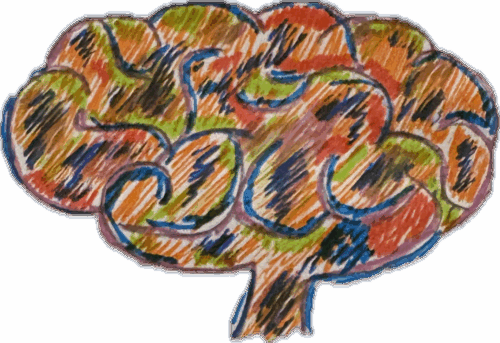
We Do Not Need to Generate a New Reality
Graphic by Katharine Weiner

Michael Jackson moonwalking away after pilfering your KFC order. SpongeBob SquarePants getting pulled over by highway patrol. Peter Griffin duking it out with anime characters.
These absurd scenarios, once confined to dreams or fanfiction, can now be conjured in seconds through OpenAI’s new video-generation model, Sora 2. All it takes is a few keystrokes and enough electricity to keep a microwave running for an hour. With growing reliance on input-output algorithms to imagine new worlds full of exciting possibilities, tasks formerly handed off to writers and artists, the question arises: what broader implications will this technology have on creative fields?
Generative AI video is stripping away the creativity that makes us human. If we keep chasing artificial worlds, we risk losing touch with the beautiful one that we already inhabit.
Gone are the days of laughing at a poorly rendered Will Smith scarfing down spaghetti. In just two short years, generative video technology has evolved from blurry, low-frame rate oddities to photorealistic clips with synchronized sound that are nearly indiscernible from reality. Ever since Modelscope’s text2video debut in 2023, the aptly named “Will Smith Eating Spaghetti Test” has become the unofficial benchmark for measuring progress in AI video.
OpenAI now presents Sora 2 as almost a TikTok for synthetic media. With an invitation code, users can swipe through millions of AI-generated clips or create their own, remixing and reinterpreting prompts from others. It’s a feed custom-tailored to human curiosity and boredom alike.
But the consequences aren’t confined to entertainment. During the 2024 election cycle, Russian-linked networks used AI to flood social media with fabricated videos targeting Democratic candidate Kamala Harris’s campaign. Intelligence reports later tied the operation to John Mark Dougan—a former U.S. deputy sheriff working with Russian military intelligence—whose fake news sites spread deepfakes of Harris and other Democrats to millions of viewers. One video falsely showed former President Barack Obama suggesting Democrats ordered the assassination attempt on President Donald Trump; another smeared Minnesota Governor Tim Walz, the Democratic vice-presidential nominee. While deepfakes and other AI tools may not have played a significant part in swaying the results of this past election, the meteoric growth of AI in the past year—both in users and generative capabilities—practically guarantees the technology will embed itself come 2028.
Beyond these political horrors lies an equally unsettling artistic dilemma. Critics have coined a fitting term for this flood of machine-made media: AI slop, a slurry of haphazardly thrown-together concoctions of aesthetic noise, stitched together from the creative labor of others. Hollywood executives are already jumping aboard. OpenAI’s upcoming studio project “Critterz” is reportedly being billed as the first fully generative animated feature—a “revolutionary” new way to make animated films while sidestepping pesky costs like paying animators. The story will reportedly follow forest creatures who go on an adventure after their village is disrupted by a stranger, a plot brimming with irony given how prompt-generated art is currently upsetting creative industries.
If completed, it would set a disastrous precedent. Once Hollywood embraces synthetic creativity, every other corner of media will follow suit. A shift like this would put the employment for the over 1.2 million people already working in the performing and creative arts fields in this country at risk. AI art becoming the standard would further pose broader threats to human expression as a principle, for generations to come.
When creation loses effort, it stops feeling human. Art isn’t just output—it’s how we make meaning out of existence, how we wrestle with the absurdity of being alive and leave something behind that says “I was here.” If we rely on AI to do that instantly, without struggle or soul, imagination, as defined by hundreds of thousands of years of human history, will cease to exist.
The more decisions we hand over to algorithms, the less we seem to trust ourselves to choose. Reclaiming that sense of human choice, deciding what should be made, not just what can be, might be the only way to stop this from becoming a system that builds itself faster than we can understand it. Before we perfect image generation down to the last pixel or teach algorithms to mimic emotion, we should be asking what kind of world we’re actually building in the process.
Of course, I understand the monetary incentive. A public-facing video model has an enormous potential market—it’s no coincidence that OpenAI became the most valuable private company just days after Sora 2’s launch.
And to be clear, I’m not anti-AI. What I protest is how tech leaders and governments have come to view it: a weapon in a new technological arms race. The United States and China treat artificial intelligence like the atomic bomb of the twenty-first century, a means of global dominance. That’s why there are so few meaningful regulations, and why the greatest resources are poured into the most addictive, profitable models.
However, when it’s regulated, developed cooperatively between nations, and used to lift human burdens—whether in hard labor, economic modeling, or medical diagnostics—it can be beautiful. It could build a world where our needs are met and our time is freed for creating, writing, exploring, living itself. That’s the dream.
But it’s hard to stay optimistic when the people steering this technological epoch seem driven more by profit than progress. We hold in our hands a tool powerful enough to reshape civilization, yet it’s being wielded to only generate engagement. It’s strange to think that something capable of freeing humanity might be the very thing that enslaves it—to convenience, to passivity, to endless content.
This leap isn’t the same as the shift from brush to stylus or pen to keyboard. It’s creating something out of nothing, out of words instead of work. It reflects the gluttonous appendage of human nature that compels us to constantly attempt to live better than we need, despite what we have (see: every billionaire ever). Instantaneous, synthetic art erases the joy of struggle, the trial and error that gives art its soul. I’ll always love the human-made games, films, and stories born from imagination, but I don’t want to live in a “Ready Player One” world where the only escape from reality is scrolling through endless, empty simulations.
These generations are only as good as their data. If we chase the quick buck now, we risk eroding creativity altogether. When AI saturates the mainstream, there will be no space left for human projects to grow. Once people tire of what’s already been generated, nothing new will follow—just an endless cycle of recycled ideas, a mirror reflecting itself into static.
I am an optimist by nature. My roommate might even tell you that I live in a land of sunshine and rainbows. Maybe that’s why I still believe in AI’s potential to shoulder burdens, plan smarter economies, and free us to live more fully. But optimism has limits. It’s hard to stay bright-eyed when the same tools that could end poverty are used to spread misinformation and churn out lifeless content.
Still, I don’t think we need to invent new worlds to feel wonder. This messy, imperfect reality we share can be enough, if we choose to make it so. We don’t need machines to manufacture awe when we’re already surrounded by it. You don’t need to generate a girlfriend; go outside and ask someone out. You don’t need to simulate adventure; take a train somewhere you’ve never been. You don’t need AI to create meaning when so much of it is still within reach. The things we try to generate are often the very things we could live, if we only remembered how. Staying in touch with the beauty of this world is harder than typing a prompt—but it’s also the only thing that still makes us human.
Philipos Alebachew ’29 (philiposalebachew@college.harvard.edu) wants to go to an art museum now.