Wellness in a Hopeless World
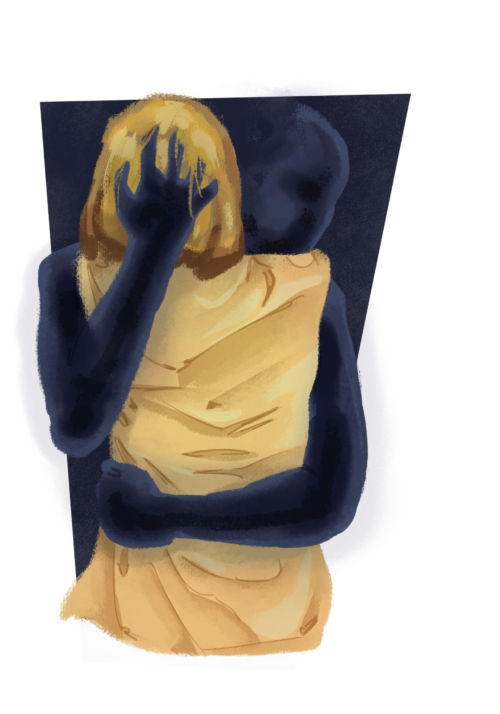
Graphic by Justin Ma
In 2021, just after the peak of COVID-19 had subsided, I started high school at a small boarding school in northern Massachusetts. Before leaving home, I didn’t have to think much about who I was, what was happening in the world, or what I owed to it.
My first disorienting memory came the night of the 2022 Buffalo supermarket shooting, which targeted a predominantly Black neighborhood, amid a period of heightened racial violence across the country. My school hosted a vigil for the victims of the tragedy. Though I didn’t know much about the shooting at the time, I followed my friend to the chapel anyway.
A handful of upperclassmen members of my school’s Black community went up to the podium to share their thoughts, but ended up in tears. As an Asian, I will never know exactly what they were feeling at that moment, but I recognized the fear and grief in their voices. The world suddenly felt confusing—way bigger, more dangerous, and hopeless. I remember how my heart physically ached, and my hands were clammy.
My friend and I walked back to our dorm in silence. Later in the evening, they opened up to me about their experiences growing up Black in America, and all the tears that they had held flooded out. Something in me shifted—my fear turned into anger.
But that was just the beginning. The following days, months, and years were riddled with police brutality, racial violence, ongoing debates and legislation restricting identities and controlling bodies, increasing book bans across states, rising public rhetoric on immigration, continued acts of antisemitism, and more.
In 2023, the Israel-Hamas war escalated, becoming a deeply sensitive, personal, and frightening issue for many of my friends. I am still trying to learn more about it and understand it as best as I can.
Then came the 2024 election cycle, which intensified polarization, fear, and hostility. Rhetoric rooted in white supremacy, legislation targeting LGBTQ+ people, federal grant cuts, expanded immigration enforcement, and renewed debates over who is allowed to belong consumed me.
After Buffalo, I thought, selfishly, that my anger would harden into something numb and manageable. But it never did. Every incident hurt, and I watched people I cared about suffer, feeling powerless to help or change anything.
Discourse around the turmoil was not an outlet; instead, it suffocated and further repressed my feelings. There were times I argued loudly and regretted the things I said. There were times when I said nothing and regretted my passivity. I kept working to listen and understand others, but the weight of those disagreements couldn’t help but linger inside me.
And all of this existed alongside my personal life and my friends’ personal lives. When the world keeps hitting you, and the parts of your own life that you thought you could control begin to slip, you start losing hope. You feel tired, wondering why you should keep trying when patterns suggest things won’t get better.
There was a recent suicide in my life, one that is not my story to tell, but has compelled me to write this article and speak up. I knew this person through the diversity, equity, and inclusion work at my high school; we tried to shift the school’s rhetoric and make even one more person feel safer in their own skin and in our community. It was work sustained almost entirely by hope because real change and meaningful engagement so rarely followed.
I remember nights when I sat at the edge of my bed, feeling helpless, small, and afraid. I had resources, therapy, friends, teachers, and still, I felt alone in that darkness.
I didn’t know this person closely, but they were the kind of person who, just by being themselves, brought a smile to people’s faces. I never would’ve guessed they were battling with such deep hopelessness. I think about them. Even with all the support I had, I still felt lonely and scared; I can’t begin to imagine what it would feel like to face that kind of darkness without support. It made me realize that even being able to ask for help is a privilege.
When I think about the forces in the world that make someone feel that giving up is the only way out, I long for a clear way to “get back” at the world. But the truth is that we can’t dismantle systemic violence, resolve geopolitical conflicts, and undo the harm that’s already been done overnight. What I can do is speak from where I stand.
There was a time I wasn’t sure I would make it through high school, and now I’m in college—a very well-resourced, appreciated, and validating college like Harvard. I worked very hard in high school, but some things can’t be explained by anything other than luck. I was very lucky. And luck always feels relative—like something only a few get to have.
Because of that, I know how it can feel to hear “mental health advice” from someone who, on paper, has “made it.” It all sounds like, for lack of a better word, bullshit. So this isn’t meant to be a solution; I am not speaking on behalf of any agenda or program. I’m using the space I’ve been given by the “Independent” to say something I genuinely believe and mean. Take it as you will.
You and I, we won’t be able to find the answers to most of our anger and confusion. Loneliness is a monster that we can’t control. Shit is going to keep happening. So much of it, too. That’s the truth.
What changes is us, and we change simply by living and growing older. Over time, we learn how to name what we feel and build tools to survive moments that once felt impossible. We begin to understand the world with more nuance and learn how to exist inside of that complexity without letting it consume us entirely. One day, we’ll look back and recognize how far we’ve come. With that comes a little bit of hope, and hope is powerful in any quantity.
Today, “wellness” is often reduced to self-care checklists and therapy buzzwords; it can feel pretentious and commercial. Those things matter, but they aren’t the whole story. Wellness, to me, means allowing yourself to rest when you need to, but returning and showing up again when you can. Sometimes, it’s being able to say, “I’m doing okay,” and actually mean it. Other times, it means being able to say, “I’m not okay,” and letting yourself be supported.
I know that when we feel scared, angry, and lonely, other people’s words don’t always come through. I’ve come to realize that the people who stay—those who keep telling you they care—really do mean it. I can now see this only because I kept on going.
We should lean on each other, no matter how cliché this sounds. But we also must recognize that there are cultural, political, financial, and other barriers that make it harder for some people to trust others and ask for help. If we’re serious about care, we should name those barriers and talk about them openly.
I have learned that I am strong, worthy, and capable of getting through challenges and being in control of my life. And so are you. We have power in how we move through the world, how we care for ourselves, how we show up for others, and how we fight for the changes we hope to see. The state of the world doesn’t have to control us. I wish I could’ve said this to the person, and I want to say it to you now: you are powerful. Even in a world that can feel so hopeless, you give it a reason to hope.
Katherine Chung ’29 (katherinechung@college.harvard.edu) writes Forum for the “Independent.”