Why I Hated My Name, Until Harvard
Graphic by Dang Lin

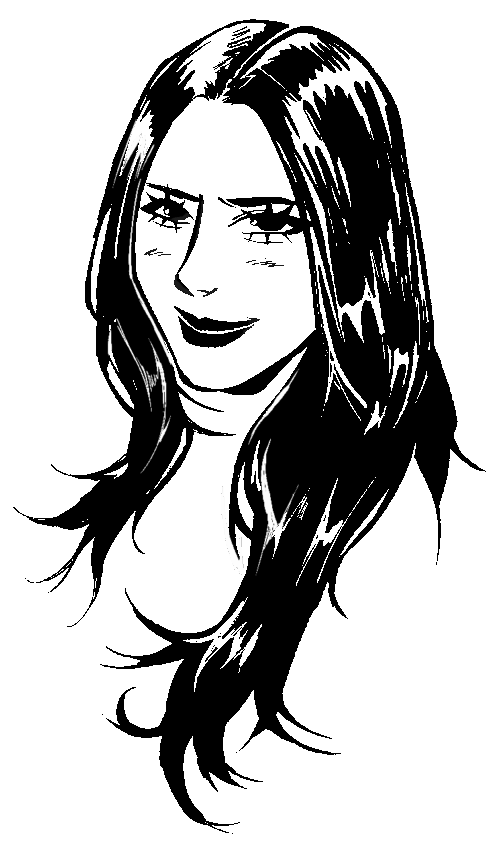
Laura. Pérez. Cremer.
When I turned 14, I began to feel a visceral rejection towards my first surname: Pérez. In Spain, every citizen’s ID includes both surnames—usually the father’s first, the mother’s second. In most cases, it is that of the mother’s which is left in second place. And like most things placed second, it is often forgotten. Though my ID showed both names, I became just Laura Pérez. Plain. Insipid. Laura Pérez.
In classrooms, teachers would roll their tongues over that combination—names I despised but couldn’t deny were mine. Each time “Laura” echoed, I held my breath, waiting to hear which version of me would follow. Would they say both surnames? Or stop at Pérez, a name shared by more than 777,000 others in Spain? Pérez, like el ratoncito Pérez, the Spanish tooth fairy—cartoonish, harmless, anonymous. Just like my surname felt to me.
A reminder of what I would never be: remembered. Loved. In the haze of my small, stifling town, Pérez whispered that I would never matter. I’d always be the girl in the corner, hiding in bathrooms, speaking only to the spirals of her mind. Everything I spoke, everything I achieved, I questioned. My ideas—like my name—felt too small, too unworthy to be heard. Pérez was everywhere. My own name erased me, just as the world did.
The enclosed and suffocating town, where even asking why my mother’s surname had to come second—why hers, too, had once belonged to a man—felt like defiance. An entire system reeked of misogyny.
At 14, I tried to let go of the name that I thought erased me. I became Laura Cremer. My poems bore the second surname, the one that had been sidelined. Sometimes, I even replaced the ‘C’ with a ‘K,’ remembering how, before Franco’s dictatorship and the Castilianization of names, it had been spelled that way—before it, too, was forced to conform.
I could only dream of being just Cremer. Still, Pérez lingered, a phantom limb. A name I tried to cut away, but it pulsed in the background. It showed up on my school exams, my credit cards, my renewed ID. New picture. Same name.
It followed me onto my first student VISA.
New country. Same name.
At Harvard, I finally held the power to name myself. On forms, I wrote “Preferred Name: Laura Cremer.” I signed my papers with it. For the first time, I felt seen. I felt powerful.
I was Laura Cremer—smarter, cooler, more confident. Or so I thought. I was supposed to be that Laura Cremer when I came to Harvard, but no one warned me about first-generation syndrome. About the way it gnaws at you, reminding you that you are both a product of ambition and a betrayal of origin. I felt guilty for sidelining my father’s side of the story—the one that smelled of cologne trapped for more than 15 hours in his office, the one that didn’t quite fit in the glossy narrative of elite colleges.
I am a first-generation college student. I come from a small town where no one leaves, where Harvard is unthinkable. Many of my international friends at Harvard had gone to American or IB schools, surrounded by peers also bound for the Ivy League. Some moved to five different countries for business trips, spent six weeks in Switzerland, or worked as an intern in Seoul. Their paths to success seemed paved. Mine wasn’t. It didn’t include international flights, summer programs, or polished résumés. My background was invisible in a room full of pedigrees.
“Did you go to an American school?”
“Oh no, just a normal national high school.”
“Oh. So what did you do then?”
My thoughts became an ocean—waves crashing, dragging me under, dulse covering my eyes. Darkness. I could hardly breathe.
This is what it feels like to be an FGLI student from an underrepresented background—you feel like you don’t belong. Everyone is more prepared, more impressive, destined for greater success. Everyone belongs at Harvard—except you. You start to believe you’re not a student, but a charitable experiment.
This lie sneaks into your ears each morning, disguised as your own voice. It speaks when my classmates understand what Joyce wanted to say in chapter three of Ulysses, when I’ve spent hours trying and failing to decode the meaning behind the ink. It speaks when I nod, pretending I’ve understood what they’ve told me, because apparently my Cambridge C2 certification doesn’t mean I know English. It speaks when they talk about their summer research and internships—opportunities that eluded my resources. My stomach knots, my hands sweat, and suddenly I’m 14 again, waiting for my name to be called.
But I am learning to navigate this ocean. Learning that I can carry both names not as contradiction, but as truth. Pérez, the shadow that taught me invisibility. Cremer, the fire that demands to be seen. Together, they tell the story of a girl who once hid in bathrooms becoming a woman who now stands in Harvard classrooms, her voice trembling but refusing to be silent.
I am both names. I carry my father’s and my mother’s, who could never dream of me being here. I carry the names of hardworking, resilient people. I hold the last names of people whose calamities have been much greater than everything I could have suffered.
Like my name, my identity doesn’t have to be one thing or the other. I am both a small-town first-generation student from Spain and a Harvard student. I am Laura Pérez Cremer. I speak both Spanish and English, and I am so proud of that.
I carry a tilde and a z in my last name.
I carry a surname that survived a dictatorship and alphabetical mutilations.
I carry two names that feel like rebellion.
I carry my accent and my history, reminders of both past and future. In a place never built for me, my very presence is an act of defiance, of claiming space where I was told I had none.
I’m still learning how to hold both names. How to accept that belonging isn’t given, it’s created. That maybe my name—long, complicated, doubled—isn’t a burden but a banner. And so now I say my name with pride:
Pérez. Cremer. Proof I come from somewhere.
Proof I belong here.
Proof I know who I am.
Laura Cremer ’29 (lauraperezcremer@college.harvard.edu) embraces both names but chooses Cremer when she signs her art.