Midterms Misery
Graphic by Chau Nguyen

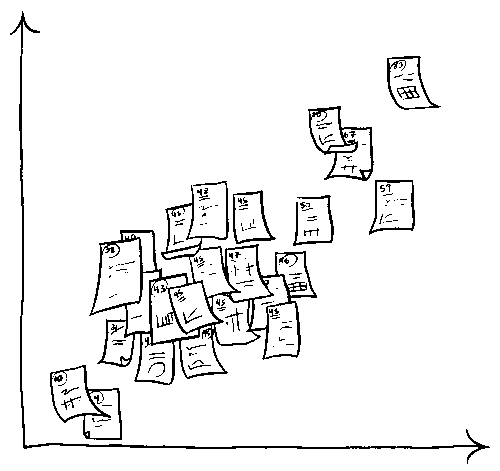
At Harvard, midterm season sees students celebrating a 48% because it’s above the class average. Yes, Stat 110, I’m looking at you. Every semester, these midterm scores bring about an onslaught of headlines from news outlets that haven’t written about Gen Z’s “academic decline” in a while. It’s nothing new. But the question remains: is there any real merit to these concerns?
When midterms roll around, STEM students in particular appear to suffer most. Physics 16, Math 55, Chem 30, LS 50, and seemingly all other science- or math-related courses, hand out despair-inducing tests that few escape from unscathed. Those who do survive make sure to tell the tale, recounting their experiences on Sidechat or lamenting to anyone who will listen.
These outwardly abysmal midterm scores raise some eyebrows: most students are failing at face value, and yet 60% of grades given are still A’s, according to Dean of Undergraduate Education Amanda Claybaugh. Doesn’t that contradict everything we’re told about grade inflation? Or, perhaps more importantly, what are grades actually supposed to reflect? Harvard’s intensive midterm culture reveals that the real issue isn’t grade inflation; it’s how we misunderstand the purpose of grading.
If transcript grades are meant to measure the percentage of material a student understands, then yes—grade inflation must be running wild. But that definition is outdated. Although the phrase “A for effort” usually sounds condescending, it carries a nugget of truth.
In fall 2024, Stat 110’s course evaluation report stated that students spent an average of 12.07 hours per week on coursework outside of class, Math 55 students reported over 20 hours per week in fall 2024, and in spring 2025, LS 50B students averaged 13.5 hours. These aren’t outliers—spending hours per day on these classes is the norm.
This isn’t to say that STEM classes are more difficult than humanities or social sciences. Where STEM has problem sets, other disciplines have readings and papers, just as time-consuming. But we don’t hear widespread complaints about English or Government midterms; that misery belongs to the math and science fanatics. So, what is it about STEM that makes midterm season so brutal?
There’s an atmosphere of competition in these courses that’s less present elsewhere. The STEM culture of publishing the minimum, mean, and maximum scores further fuels the race to be the “best” in the class. There’s a burning sense of shame that comes with underperforming—checking your exam score in the privacy of your own dorm, not knowing whether to laugh or cry when you see a score well under a failing grade, only to see a Canvas announcement stating that you have the lowest grade. It’s difficult to keep such private information when the statistics are made so publicly available.
Another reason for this competitiveness may lie in the hierarchical culture of STEM courses. Some are explicitly harder than others—Physics 16, for instance, is notoriously difficult, so only the bold enroll. Other departments rarely rank courses so visibly, aside from the occasional Econ or Gov course. That might reflect Harvard’s emphasis on STEM, but that dynamic also derives from the competitive design of STEM assessments themselves.
To blame grade inflation is to miss the point. Grades don’t define our value; our work and persistence do. Even if every student were guaranteed an A, most would still strive for excellence. That drive is part of who we are as Harvard students, and it’s a major reason many get admitted in the first place. Of course, effort alone doesn’t guarantee understanding, but it’s a truer marker of learning than a single test score.
Much of Harvard’s unique atmosphere revolves around the need to be the best, even when grades don’t demand it. This is shown in the wholly voluntary extracurricular activities that students immerse themselves in, which do not rely on grading to ensure participant excellence. While this intensity, both within and outside of the classroom, can strain students, it’s also where many thrive.
This is where the label of “grade inflation” falls flat. Merriam-Webster defines grade inflation as “the assigning of grades higher than previously assigned for given levels of achievement.” Critics fixate on Harvard specifically because of the perceived value that the institution’s education carries; grade inflation on campus comes with the concern that attending an Ivy League institution will eventually become meaningless.
So, when midterm season rolls around, students work. They study, collaborate, and try to prove something, whether that be to themselves or their peers. They walk into each exam hoping that their hours of effort pay off. Even if they get a 48% on the Stat 110 midterm, they know they’ve done the best they could.
That is what a student’s grades should reflect at the end of a course.
Grades are just numbers. They don’t, and can’t, define anyone, even when we may want them to. That’s why the so-called “grade inflation crisis” is overblown. Professors aren’t handing out A’s to avoid bad course evaluations—they’re acknowledging the growth and effort students demonstrate over the semester. At the end of the day, learning is about making mistakes and growing from them, and students thrive wherever they are allowed room to do so, especially within courses where midterms form an overwhelming share of a student’s grade. Maybe “grade inflation” just captures the true spirit of learning: education free from fear.
Eden Bridge-Hayes ’29 (edenbridgehayes@college.harvard.edu) is a scared humanities major who wants to hurry up and finish her math requirement.