The End of the Old Order
Graphic by Neshama Ryman

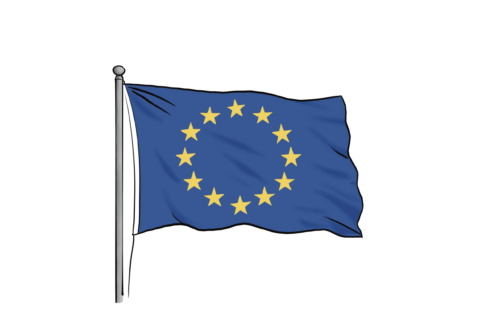
In a speech at the World Economic Forum in Davos, Switzerland, Canadian Prime Minister Mark Carney ’87 proclaimed that the “old order is not coming back.” In the face of President Donald Trump’s consistent challenges to multilateralism, trade threats to allies, and the more recent open questioning of European sovereignty—as it pertains to Greenland—truer words have not been spoken. It appears that the age of European dependency on the U.S. is over as American politics pulls further away from its allies and looks increasingly inward.
Since the end of the Second World War, Europe has enjoyed a special working relationship with the U.S., one that has become increasingly fragile under the Trump administration. Now more than ever, Europe must act decisively to secure its own strategic independence before its dependence on America becomes a fatal weakness.
Trump’s most recent crusade, which aims to bring Greenland under U.S. control, is a stark warning to Europe that delaying a reassessment of its strategic autonomy is no longer feasible. Tensions have momentarily subsided with the announcement of a “framework of a future deal with respect to Greenland.” However, the mere fact that a supposed European ally threatened its own constituents with a potential 10% import tax speaks to the fragility of transatlantic trust and the future of U.S.-European relations.
Though many have labelled NATO Secretary General Mark Rutte as the “Trump Whisperer,” this latest development of a potential “framework” amounts to nothing more than appeasement, rewarding intimidation rather than principled diplomacy. It is a telling sign that Aaja Larsen, one of only two Greenlandic MPs in the Danish Parliament, was not consulted in these negotiations, writing on Facebook: “NATO in no way has the right to negotiate anything on its own about us from Greenland while bypassing us. Nothing about us, without us.”
Furthermore, Polish President Donland Tusk tweeted on Jan. 20: “Appeasement is always a sign of weakness. Europe cannot afford to be weak—neither against its enemies, nor ally. Appeasement means no results, only humiliation. European assertiveness and self-confidence have become the need of the moment.” Europeans know the consequences of appeasement far too well; it was only 88 years ago that Neville Chamberlain returned from Germany, following the Munich agreement, ceding former Czechoslovakia to the Nazis. Upon his return, Chamberlain declared that he had forged a “peace for our time.” Less than a year later, German troops invaded Poland, catalyzing the Second World War.
This is not to liken Trump to Hitler, nor to imply that I believe the U.S. would have taken Greenland by force—something Trump had already ruled out—but rather, to posit that intimidation can no longer be rewarded with obedience. The Trump administration prefers diktats to diplomacy and, therefore, it is not a surprise that leaders from 27 European countries have gathered for an emergency summit to discuss the future of the transatlantic relationship. An essential question is being asked of Europe: how to respond when, in the words of French President Emmanuel Macron, “we are not respected, and when the rules of the game are not respected.”
On the topic of disrespect, Trump, in a Fox News interview last week, claimed that troops from allied nations “stayed a little back, a little off the frontlines” in reference to the war in Afghanistan. Not only is this blatantly disrespectful to the more than a thousand coalition troops who gave their lives in the conflict, but it is also especially offensive to the Danish. In Afghanistan and Iraq, Danes lost 52 of their soldiers, 43 of those in Afghanistan, which was a higher per capita loss of life compared to the U.S. during the conflict.
The transatlantic relationship has, from its inception, been fundamentally unequal. It should come as no surprise that Trump treats European nations as dependents, not as equals, when for decades European leaders have relied on Washington to underwrite their defensive shortcomings. Trump is the first to question this status quo through action. In doing so, he has soured the special relationship that is not so special anymore. There is a need for European countries to transform the decades-old rhetoric of strategic autonomy into a sustained military and economic vision for a world without the American safety net.
For Europe to go alone is a daunting and unprecedented prospect. So too is the idea that the American president would bully and threaten their closest allies—now no longer an abstraction, but a harsh reality.
Trump, in the same Fox News interview, questioned whether NATO allies would come through to the U.S.’ aid in times of need. In case the President needs a reminder, the only time Article 5 of the North Atlantic Treaty, which states that an attack on one NATO member is considered an attack on all, has ever been invoked was in response to 9/11. European allies answered the call without question. A more uncomfortable question on the minds of Europeans today runs in the reverse direction. In the current political climate, would the U.S. do the same for them? The credibility of American guarantees can no longer be taken for granted. This weakens the foundations of NATO and is yet another reason why Europe must prepare to go alone.
In contrast to President Volodymyr Zelensky’s recent comments at Davos, in which he stated, “Europe will always be reacting—catching up with new dangers and attacks,” Europe must be proactive in creating tangible strategic autonomy. That means each country, especially wealthier countries like the United Kingdom, must pull its weight in defense spending. It means a whole host of other economic and military changes, far above my expertise, have to occur to create an autonomous, capable Europe.
I fear that the European political will is not where it needs to be. It must be found. Years from now I think it is safe to say historians will look unfavourably on the Trump administrations. They may also look at Europe and either scratch their heads at their hesitation, or praise their willingness to venture into the unknown. I can only hope that common sense prevails, but in today’s political landscape, common sense does not seem so common anymore.
Europe must turn a page and move to re-establish itself on the world stage, demanding the respect it deserves. Respect is not given but earned, and steps must be taken to show our allies and enemies that Europe is capable of defending itself. The time is now. As Russia continues its conflict in Ukraine and the Americans pull away, Europe can no longer afford to stand in the middle, unequipped and unprepared for what the future holds.
Noah Basden ’29 (nhbasden@college.harvard.edu)hopes his igloo Airbnb in Greenland still retains its value.