Bad Trip
Graphic by Sage Willey

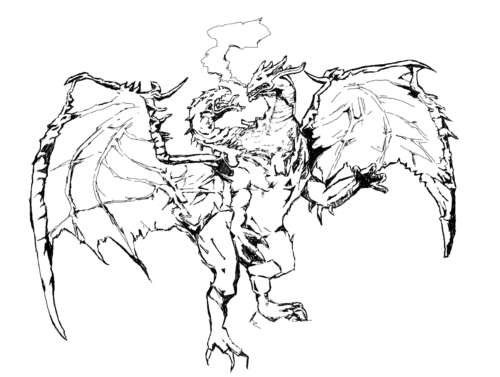
The Knights of the Round Table have always known two versions of the dragon.
They gathered anyway. Same rooms, different buildings, the same low music, cold coming through the window that someone cracked for airflow. This is what the Round Table looks like in practice: six people distributed across every available surface, coats still half on, nobody having planned this, everyone pulled there by the same wordless gravity. The legend left this part out. You needed somewhere to be that wasn’t asking anything of you. This was it.
Every high is, at its core, a negotiation with the self. Not an escape from it. The self is still there—it is always there—and the dragon is always there with it, but the tight choreography loosens, and you meet something that was waiting. Whether that meeting goes well depends on what you find.
The first dragon arrives slowly, softening the edges of things, loosening the grip you didn’t know you had. Time stops being a resource and becomes something like the weather, something that passes over you rather than something you spend. The room expands. The music makes sense in a way it didn’t thirty minutes ago. Someone says something, and everyone laughs, and nobody remembers what it was, and that is fine, that is perfect, that is the whole point. You are still yourself, but the tight choreography of it has gone slack. You sit in the slack. It is enough.
The second dragon arrives without warning.
One moment you are in a room, and the next you are watching yourself be in that room. This is not the same thing. The walls do not move; they assert themselves. The music, which was perfect, is now just sound. Someone is talking, and the words are reaching you from a distance, through water, and you are somewhere else entirely. You check the clock. 10:47. You think about something you cannot name. Time, maybe, or the future, or a conversation from three weeks ago, you have already analyzed into nothingness. You check the clock again. 10:48. The room is the room. You cannot make it stop.
This is the bad trip. Not horror. Just the wrong version of the same door. The question is why clarity feels like an emergency. At Harvard, it always does.
It begins in September. The leaves are changing, and the Yard is beautiful in the way it is beautiful every fall—reliably, as if on schedule. Everyone arrives with a new version of themselves assembled over the summer. Everyone is reinventing, calibrating, running the numbers on who to be, and the leaves keep falling, and nobody is looking at them because everyone is too busy looking at each other, measuring, adjusting. Weed is everywhere by October. Not despite all of this. Because of it.
It continues in the classroom. The seminar where you raise your hand and say something you do not entirely believe because the room has a shape and you have learned its shape. The section where twelve people perform engagement with a text nobody reads, and the teaching fellow nods and writes something on the board that everyone subsequently copies. You develop a fluency in this. You learn which ideas land, which references signal the right things, and how to sound like someone who has thought carefully about something you encountered forty minutes ago. The institution calls this education.
You call it Thursday. By Friday, you are looking for the dragon. Not because you want to get high, exactly. Because you want to stop performing for a few hours, and this is the fastest way you know.
By the time you have been here long enough, the performance feels like the self. The LinkedIn bio becomes the autobiography. The five-year plan becomes the desire. You stop being able to locate where the institution ends, and you begin. This is, I suspect, the intended outcome. An institution that has successfully colonized your interiority does not need to enforce its values externally. You carry them. You become the enforcement. So you look for the gaps. Everybody does, in their own way. This is yours.
So you find a room. Not a sanctioned one—not the wellness center or the meditation app or the therapist with the two-week waitlist. Just a room, a few people, nobody performing anything. A couch, a broken lamp, a window cracked for airflow. The question of who you are becoming is briefly, mercifully, not on the table.
The choreography loosens, and underneath it, there is something quieter and older and less impressed with itself. You remember that you have a body, that the body is sitting in a specific room on a specific night, that the room is warm, and the lamp is broken, and the people around you are real in a way that your five-year plan is not. This is not insight, exactly. It is just a heightened presence. But presence, at this institution, at this hour, feels almost transgressive.
Until it isn’t. The clock still says 10:48.
The snow came late this year and stayed too long. By March, the Yard was still gray, stubborn, like something that had decided not to leave. The semester had opened up in a way that felt less like freedom than like a sentence—too much time, not enough urgency, the calendar full of obligation dressed as opportunity. An endless performance of an ending, with everyone manufacturing the appropriate emotions on cue, making sure the last chapter looked like a last chapter.
The dragon arrived, as it does, and split the room.
Half of the table met the first dragon. Time softened. Someone fell asleep on the end of the couch, and it ends gradually, the way things do when nothing is forcing them to continue. The lamp in the corner had been broken all year, and nobody had it fixed. Sir Gawain said he would fix it in October. The room is dim; it is perfect.
The other half met the second dragon—I went somewhere else.
The heart goes first. Not pain, just speed, a sudden awareness of the muscle doing its work, insistent, impossible to ignore. You breathe. You find a corner of the room to fix your eyes on, until the heart slows, the walls recede, and the music becomes music again. It takes as long as it takes. Nobody notices, or if they do, they say nothing, which is its own kind of mercy.
But it leaves something behind. Not trauma. Just the knowledge that the door swings both ways and you cannot always choose which way it opens. The thing that loosens the grip can, on the wrong night, lock you inside it.
The Knights know this. We do not talk about it. We come back anyway.
Sir Galahad would say: smoke grass, joust fast. Sir Gawain would agree. Sir Percival would already be asleep on the couch. The quest continues. The dragon is still there on the other side of the semester, wearing the face of whatever comes next, and you can meet it sharp or soft, and most nights, soft is better.
Most nights.
Outside, the sun is finally coming back. The snow is soft at the edges. Someone is making a list. Someone is performing an ending.
My hands are cold. The room is the room. The dragon is waiting.
Sir Lancelot rides out in May, because you don’t slay some dragons—you just stop living inside them.