The Curse of Loyalty
Graphic by James Foss

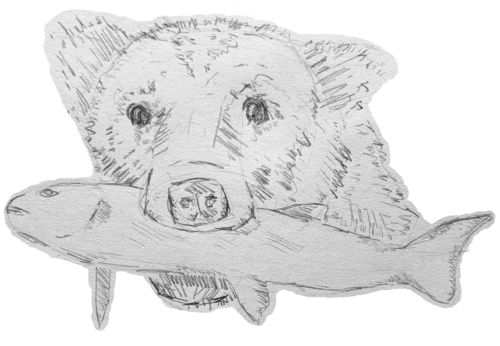
Memphis is a beautiful city. Its phenomenal cuisine, rich history (both good and bad), and stunning music have made it a place I love living in. And as one of 28 cities with an NBA team, it is also a great place for any sports fan—supposedly. The Grizzlies are one of five teams that have never reached the NBA Finals, despite having some truly talented rosters in their short 30-year tenure. So why do they still have many loyal supporters?
Fans may have an excuse to support a team outside their state, especially if no local squad exists; after all, everyone has the right to root for a roster. Maybe they cheer for the nearest professional team. Maybe they back a team from where their family originates. But when your own city has one, it feels disingenuous not to be a fan. Even if those teams are terrible, you are cursed to stick with them through thick and thin if you are a true fan.
When I began following sports more seriously, the Memphis Grizzlies were starting to get good again. Led by a young core of Ja Morant, Jaren Jackson Jr., and Desmond Bane, the Grizzlies had the city buzzing with excitement simply because they were winning games. Memphis, a small, forgotten Southern city rich in history, soul music, and the legacy of the civil rights movement, was getting national attention.
Originally, the Grizzlies were based in Vancouver and entered the NBA as an expansion team in 1995 alongside the Toronto Raptors. Until 2001, they were barred from having the first overall draft pick, regardless of where they landed in the lottery. This ruling had bigger implications for the Grizzlies than for the Raptors, because the Vancouver team had six consecutive losing records when a top player could have turned the tide. This was coupled with empty bleachers; unlike New York, Chicago, or Los Angeles, there was not a substantial market for a basketball team. This combination of poor seasons and limited fan support led to the team’s relocation to Memphis before the 2001 season.
Memphis had experience hosting a basketball team with the American Basketball Association’s Sounds during the ’70s before the ABA and NBA merged and eliminated the squad. So when the Grizzlies moved to Memphis in 2001, many were excited for the return of professional basketball. Over the next 18 years, including the players of the “Grit and Grind” era of the 2010s, the team grew until the Morant-led team took over and boosted its popularity.
This new team somehow embodied Memphis: loud, scrappy, and full of energy and love for each other. Every alley-oop, every block, every win was a statement to the world that Memphis would not be forgotten. The city is not like New York or Boston, cities that often serve as iconic backdrops for American shows and movies. Memphis is a run-down has-been that suffers from continued racial biases and economic hardship. But during that prime, we felt like we were on top of the world.
I still remember those playoff series, watching Morant play his heart out. I remember special days when my strict private school would let students dress down for “Grizz Day.” The team’s chemistry was so inspiring that the camaraderie rippled through the city. Initiatives and service projects throughout Memphis helped those in need and brought a genuine spark to Memphis.
And then it all started to fall apart.
Injuries and bad decision-making plagued the team. They were no longer “fine in the West,” as the players once believed. The city’s resurgence in everyday conversation had faded. Free agents had no interest in playing in Memphis when cities like Miami or Los Angeles offered more money and more fun. It was time for this small city to lapse into its old self.
Every season now feels the same. The Grizzlies enter the draft with a high pick and hopes of turning things around. As one hole is plugged in the draft, two more pop up as players fail to develop. This cycle continues, dropping us further and further in the power rankings.
The past four years have been painful. Looking around at other small-market teams as their young cores develop and compete among the titans, I cannot help but realize the Grizzlies’ trajectory is much grimmer. Years of tanking have made me practically apathetic toward professional basketball altogether. One of the first sports I felt consistently entertained by has now been relegated to a passing thought.
And yet, I am still a Grizzlies fan. Although it would have been easier just to support a different rising team or jump on the bandwagon and root for Boston sports, I cannot forget the excitement that the team brought to Memphis—to me. I cling to the hope that one day, the Grizzlies will be back in playoff conversations, and that one day, they may even win a championship.
Unlike fans in bigger cities, where half the crowd is made up of bandwagoners or people simply there to flaunt their wealth, the people sticking with the Grizzlies do so because they truly care and need something to believe in. They still resonate with that blue-collar “Grit and Grind” mantra that promises that anything is achievable through hard work. They know that every player who puts on a Grizzlies jersey will play his heart out because the team is bigger than just basketball: It is one of the last hopes for an otherwise forgotten city.
So it is not really a curse that the Grizzlies are in Memphis. With the hope and excitement that they bring to the city, the team can only be seen as a blessing.
Teams like the Grizzlies are more than just competitors. They represent the larger community that surrounds and supports them, however divided. In good times and bad, they unite fans around a shared hope. Even in a city as fragmented and hostile as Memphis, with high rates of poverty, crime, and widespread urban blight, a single team can bring strangers together. As more people and players push for the Grizzlies to move to Nashville, I ask that they recognize how important the team is to the city. Small-market teams are just as important as the big titans.
Tyler Dang ’28 (tylerdang@college.harvard.edu) laments the 2022 Grizzlies.