Harvard’s Gabriel Kreiman Thinks Artificial Intelligence Can Fix What the Brain Gets Wrong
Graphic by Sage Willey

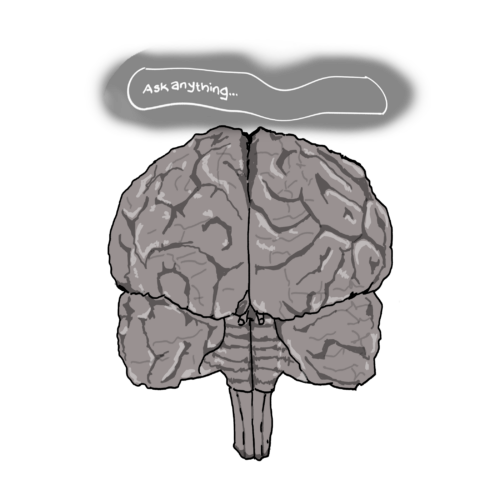
A Harvard Medical School neuroscientist left one of the most prestigious posts in academic medicine last year to chase the bold claim that artificial intelligence can give people what the human brain cannot: perfect, searchable, infinite memory. Gabriel Kreiman, whose lab has spent 20 years mapping how the brain consolidates experience, launched Engramme last year with co-founder Spandan Madan, a former Harvard Ph.D. student. The startup is now in talks to raise around $100 million at a valuation of nearly $1 billion.
As AI has continued to grow, professors and researchers in academia have increasingly moved into the private sector—whether recruited by major tech companies like Google and Meta or founding startups of their own—typically in hopes of faster impact or better compensation. Kreiman is the latest example. He received a Ph.D. in computational neuroscience from the California Institute of Technology, completed postdoctoral training at the Massachusetts Institute of Technology, and became a professor at HMS in 2007.
At HMS, his lab studied how memories are formed in the brain, hoping to construct models that could replicate the underlying biology. “I realized that to [augment human memory] at scale … I need to do this outside of academia, and that’s why I founded the company and started in the Silicon Valley world with Engramme,” Kreiman explained in an interview with the “Harvard Independent.”
What separates Engramme from typical AI assistants is its underlying architecture. Current AI systems, such as ChatGPT, are known as large language models. “When we started working on this problem, we started working with language models,” Kreiman said. “But they are the wrong architecture for memory.” He explained that this method is like using the language part of your brain to recall memories, rather than the part responsible for memory. “We’re using the kind of algorithms that have been important in neuroscience to model associated memory formation and retrieval in the longer term.”
“Think about every book you’ve ever read, every conversation you’ve had, every person you’ve met, every email, all of that being instantaneously accessible to you,” Kreiman stated. “We can ingest [everything that’s in digital format] into our model and then proactively remind you or bring those memories to you.” In that sense, humans could have access to effectively limitless memory: any digital information given to Engramme could be stored and recalled when the memory is relevant.
In practice, Engramme ingests a user’s digital data and builds what Kreiman calls a “memerome,” a play on “genome”—a personalized index of a person’s memory. Rather than waiting for a user to search, the system monitors context in real time and surfaces relevant information automatically. As a user writes a paper in Google Docs, the algorithm might surface an article they read three years ago. If a user meets with an old friend on Zoom, the system could provide any information from their last virtual conversation. Essentially, the system will read data from any platform you give it access to—your emails, Zoom meeting transcripts, photos, texts—and then retrieve and present relevant information to the user.
The interface currently runs through external devices, like a smartphone or smart glasses, feeding information to the user as it becomes contextually relevant to the large memory model. While the technology is currently limited to external devices, Kreiman dreams of a science-fiction future. “In the long term, what we’d like to do is go inside the brain.”
Kreiman’s motivation for enhancing memory comes not only from his research but also from personal experience. “One of the inspirations for me [in this path] was that my grandmother passed away because she had Alzheimer’s,” Kreiman remarked. “So witnessing on a daily basis that progression in memory loss has been a major inspiration for me, in addition to all the research to actually build the company.”
While Kreiman felt that moving from academia to industry was necessary, it was a challenge. “My research has been at the intersection of vision, memory, neuroscience, and AI, and those are the building blocks of the kind of ideas and algorithms that we have at Engramme, in addition to all of the research foundation,” he explained. “Building a company requires a lot of other skills and other knowledge in the business world, and many other aspects which are completely new to me.”
Although Kreiman did not comment on the reported talks to raise around $100 million, he explained some of their go-to-market strategies. The company just moved into a San Francisco office, is hiring rapidly, and is seeking to hire more personnel from top AI companies.
Kreiman’s co-founder, Madan, led the development of the startup’s systems. “[Madan]’s really an amazing computer scientist. A lot of the actual coding of the algorithms, a lot of the actual architecture side, it’s really been driven a lot by his passion and his amazing talent,” Kreiman explained. Madan completed his Ph.D. in computer science at Harvard, working in Kreiman’s lab for the last seven years before they decided to leave and build the company together.
Of course, building a perfect memory requires extensive data collection, which is why privacy is at the forefront of Kreiman’s mind. “There’s nothing more intimate than your memories,” Kreiman stated. He clarified that Engramme will not be able to read any of your memories, and users will have complete control over what memories they share with the algorithm. The company does not directly store any raw data; only the processed, encrypted data.
Another ethical question is availability. Will consumers who can afford a “perfect memory” have an advantage over those who cannot access the technology? “I mean, not everybody has access to LLMs, right? Not everybody has access to computers, not everybody has access to cars,” Kreiman countered. “I think this is a very good question that applies to almost anything.”
While Kreiman was inspired by his late grandmother, he acknowledged that the technology was designed for the general population, not as a treatment for dementia. “This is not a cure for Alzheimer’s. This is an aid to remember things,” he stated. “But I think people who have early dementia or [are] beginning to see the signs of memory loss are the ones who are going to embrace this faster.”
As the company continues to grow, Kreiman is ambitious and envisions success. He acknowledges that many colleagues and academics at Harvard thought his decision to move into industry was “crazy.” Kreiman acknowledged that Engramme builds on research and scientific principles developed at institutions like Harvard, highlighting academia’s role in advancing the field. However, he added, moving into industry allows for a major, tangible impact by bringing that research into the public eye.
“I envision that five years from now, we will do for memory what OpenAI did for language,” Kreiman said. As of now, perfect memory remains an aspiration, but Kreiman is betting it won’t for long.
Patrick Sliz ’27 (psliz@college.harvard.edu) wishes he could have a perfect memory during his exams.