Learning the Words
Graphic by Madison Krug

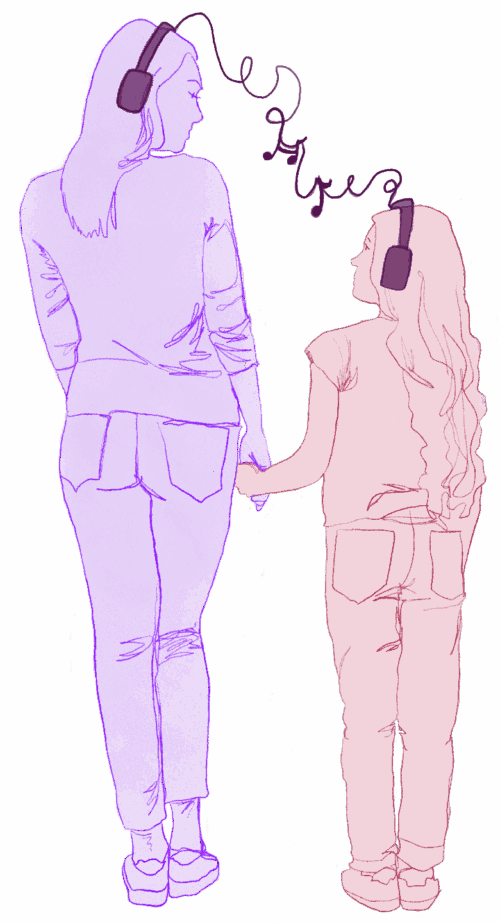
Striped, terry-cloth towels hang flimsily from the ceiling beams as my cabin of 16 12-year-old campers scream about Taylor Swift, Sharks and Minnows, and what we’ll have for lunch. I make attempts to stay clued into their pop-culture discourse—teaching them the “Pitch Perfect” cup song at Camp dinner and the lyrics to Natasha Bedingfield’s “Unwritten” before bed. It feels, though, most of the time, like they’re speaking a different language.
For one week this summer in rural Massachusetts, I was a camp counselor for Harvard College’s chapter of Kesem, a national organization supporting children who are affected by a parent’s cancer. The work was hard and emotionally taxing, but it was worthwhile. To see my campers and others alike find their voice, unravel their emotional walls, and experience wild joy while learning from them myself was a beautiful experience.
I learned that Taylor Swift makes “glitter pen” albums and “quill” albums, attempted to understand what “The Amazing Digital Circus” was, practiced the movements of Katseye’s “Gnarly” dance, learned that they weren’t counting when they said “6 7,” followed along as they transformed knots into friendship bracelets, and rapped Lafayette’s verse in “Guns and Ships.” It was messy, confusing, and wondrous.
Most of all, though, I was fascinated by the ways that pop culture, and the references I actually did understand, bridged the gap between me and them. More often than not, I could keep up with their fights over Conrad and Jeremiah, or what Easter eggs we might expect before “The Life of a Show Girl.” For the most part, I held my own, and when I couldn’t, they took my hand and happily walked me through all that I was missing.
Pop culture is often heralded as frivolous or even superficial. Yet, more than ever, I think music, movies, television, literature, video games, and even Internet memes are forming a universal cultural meaning. And this meaning, one that transcends generational divisions, creates a fluency and a language.
***
We’re driving down I-95 from Miami to Orlando. As Fleetwood Mac bellows through the rental car’s speakers, I stare out the window, watching the balmy Miami sky fade into the swollen depths of Orlando. My Dad hums “Everywhere” as we share a melted chocolate-chip cookie.
We’ve all sat in the front seat with our dads as they turn Yacht Rock Radio towards max volume when their favorite song plays. I hear “Come on Eileen” as we pull up to school and sink into my seat, embarrassed. But I love that song. I also love the Beatles, Stevie Nicks, and Simon & Garfunkel too.
Music is how we speak to each other.
Yet this simple act—that of a parent introducing a child to their favorite music from decades past—is another example of how media is used as a way to communicate context and memory. These songs in the car once accompanied first loves and late-night drives. It’s a culture he wants my brother and I to grow up with. And after the song is over, I catch a glimpse of his 16-year-old self in the back of his eyes.
Pop culture references build concrete walls around ideas like nostalgia. They become tangible. I gain insight into the experiences that shaped who my father is, and the generation he belongs to. Pop culture, in every sense, becomes a convergence of age, experience, and perspective—a cultural dialogue.
***
Few things, other than our shared passion for children and public policy, led to small talk between me and my co-workers this summer. Yet, reality television meaningfully wedged its way in our morning elevator rides. Did you see last night’s episode of “Love Island?” Wasn’t the “Stand on Business” challenge insane?
My co-workers, who watch it while they pay their bills and apply to grad school, relate to my opinions in a way that feels so different and yet so similar. We share playful arguments about who should’ve gone home on last night’s episode or what couple deserved the date to create space for dialogue and connection.
Most importantly, though, pop culture teaches us empathy. Wrapping our heads around who the Bee Gees were and what a Labubu is allows us to understand what challenges, anxieties, and aspirations were and are fueling the lives of our parents or little cousins. Engaging with contemporary works and pieces of media enables us to confront modern perspectives, especially those that radically differ from our beliefs.
Engaging with the platforms and content of another generation requires a willingness to step outside of our assumptions. It teaches us about patience, curiosity, and the enduring nature of storytelling. By engaging with stories across mediums and decades, we learn that while details like style or slang may change, the emotions and challenges we all face remain similar. Pop culture is never static; it remains alive and evolving.
Rania Jones ’27 (rjones@college.harvard.edu) is now well-versed in the vernacular of today’s 12-year-olds.