Kitchen Sink No. 10
Graphic by Sarahluna Sassine

The ceiling had not changed. The crack ran from the corner to approximately the center of the room, branching near the light fixture into two thinner, diverging lines. My eyes had traced it so many times that I had begun to suspect it meant something—though deep down I knew it meant nothing. It was only plaster doing what plaster does when the building settles and the cold seeps into the walls and the years accumulate unnoticed until the damage is visible. By then, it is too late to do anything but look at it.
Thomas was not here. They had moved him days ago, or weeks—time does not behave in this place, it only pretends to, the way the attendants pretend to care and the doctor pretends to listen and the whole building pretends to be a hospital when it is really a container, a place where they put you when the world has decided it cannot accommodate the shape you have become. His bunk was stripped. The mattress bore the faint impression of his figure, a shallow declivity that would not survive another week. I found myself looking at it more often than I should. The sunken portrait of a man who had once been and was now removed.
I missed him—surprisingly. I had spent months resenting his breathing, his presence, his meticulous rituals, his chewing each bite 12 times, his folding the towel into quarters, the way he washed his hands as though the act of washing could reach something that soap and water had no jurisdiction over. I hated the fact of him. And now that the fact had been taken away, the room felt not empty but exposed. I felt exposed, almost as if my body had the skin pulled back, everything visible, everything too close to the surface.
…
Dr. Whitmore’s office smelled of pipe tobacco and old paper, the same as always. The fire in the grate. The bookshelves. The walled garden through the window, holding its winter emptiness with the composure of a thing that has learned not to expect anything. I sat in the chair opposite the desk and placed my hands in my lap, deliberately, the way Thomas would have done. Thomas’s mannerisms produced better outcomes in this room. The doctor preferred compliance. He mistook it for progress.
He asked how I was sleeping. I told him fine. He asked whether the dreams had returned. I told him I did not dream. He made a note, and I watched the pen move and thought about how strange it was that a man’s suffering could be reduced to a mark in a book, a single gesture of the wrist, and then the page would turn and the mark would be buried under other marks, and none of it would matter.
He said he wanted to talk about the girl from the library. I said nothing. He waited. The same patience as always, which was not patience at all but a kind of professional emptiness, a refusal to fill the silence so that you would fill it yourself and give him something to write down. Thomas had spoken about her, he said. Thomas had said she was important to both of you. The word both sat in the room like a third person.
She is not something I will discuss, I said.
Whitmore watched me. His expression had changed—not the appraisal anymore but something tentative, careful, as though he had found what he was looking for and was not certain he wanted it. He set his pen down. He did not make a note. This was unusual enough that I registered it, the sudden quiet where the scratching had been, an absence louder than the sound itself.
Then he said: Tell me about your mother.
The fire shifted in the grate. A log settling into its own collapse, the soft sound of something giving way. I looked at Whitmore and found that his face had not changed, that the question had cost him nothing, that he had placed it in the room carefully, without emphasis, certain that the room would hold it. My chest tightened. Not all at once. Gradually. Finger by finger, until the hand was a fist and the fist was a different thing entirely.
I told him she died when I was seven. Then I stopped, because the fact was sufficient. The fact was what they put in the file. The fact required nothing further.
Whitmore did not write it down. He leaned back in his chair—not away from me, but into a kind of settling. An adjustment of weight that made me understand he was not going to let the silence do the work for him. He said Thomas had told him the same thing. The age, the winter, the illness. He said Thomas could go no further than that. But then he said something else. He said Thomas had described a voice—a woman’s voice, recurring, saying a name Thomas did not recognise. No context. No scene. Just the voice, arriving and arriving, and Thomas unable to place it.
He asked if I could hear it too.
I looked at the clock on the wall and watched its hands move and thought about nothing. My chest was tight. My hands were in my lap. The clock moved, and I sat in the chair, and the room held us both, and I said nothing for what must have been a very long time.
Whitmore waited. But not with a professional emptiness—rather, something nearer to patience, as though he understood that the answer to what he had asked had to travel a great distance to reach the surface.
The memory does not stop, I said. I do not know how to make it stop. Thomas—and here I paused, because I did not know what I meant to say about Thomas, only that his name had come and I had let it—Thomas does not have this problem.
I told him about the house. Not the house in Clerkenwell, not my father’s house—the other house, the one before London, the one on the edge of a village whose name I could no longer say aloud because saying it made it real and I had spent years trying to make it not real. There was a garden with a wall around it, and beyond the wall a field, and beyond the field a wood where the trees grew so close together that the light could not get through. I was seven. My mother was ill. She had been ill for a long time—weeks, months, I could not have said which, because when you are seven the difference between a week and a month is not a difference of time but of endurance, and I had been enduring for as long as I could remember, which was the whole of my life, which was not very long.
The room where she was kept was upstairs. I was not supposed to go in. My father had told me this, not gently, not cruelly, only with the particular firmness of a man who believes that rules, if observed precisely enough, can prevent what they were designed to prevent. Stay downstairs. Do not go in. The doctor is with her. These instructions were clear, and I followed them as I followed all instructions—obediently, resentfully, with the growing suspicion that obedience was a trick they played on children to keep them from seeing what was actually happening.
I went in.
Not because I decided to. The distinction matters. I did not stand at the bottom of the stairs, weigh the consequences, and choose. I was downstairs, and then I was on the stairs, and then I was at the door, and then I was inside, and the sequence had no gaps, but it also had no decisions—it moved the way water moves, downhill, toward the lowest point, toward the place where everything collects.
She was in bed. The room smelled of carbolic and something else, something sweet and wrong, the smell of a body that has begun the work of leaving before the person inside it has been told. The curtains were drawn. The light was the colour of old paper. My father was not there. The doctor was not there. She was alone, and I was alone with her. The silence in the room was not the silence of peace but the silence of something that had already been decided and was merely waiting to be carried out.
I stopped. I could hear my own breathing in Whitmore’s office, suddenly, the rasp of it, and I could feel the chair beneath me and the specific temperature of the room, and for a moment I was only there, only in the office, and the other room was gone and I was grateful for that, and then it came back, as it always comes back, not because I chose to return to it but because the memory does not recognise my authority to leave.
I stood at the foot of the bed. She looked at me, her eyes open but not seeing me. They were seeing something behind me, or beyond me, or inside me, something that had no shape and no name and that frightened me not because I understood it but because I could feel it—a draught from somewhere, an open window that I could not find. Her mouth moved. She said something. I heard it, and I did not hear it, and the sound of it has lived in me ever since, not as words but as a vibration, a frequency, the way a bell continues to hum after it has been struck and the sound you hear is not the original sound but its ghost.
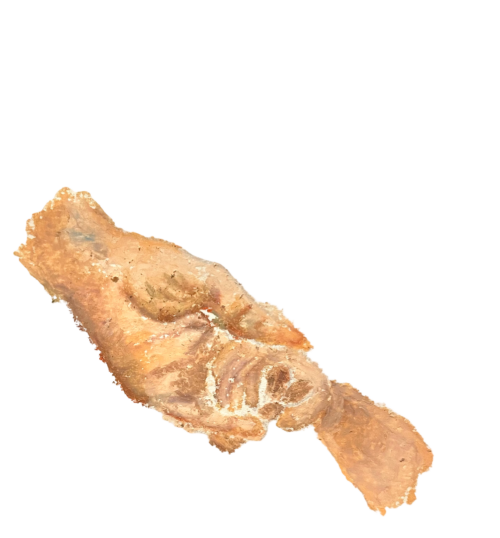
I went to her. I took her hand. It was cold and frail, and I held it despite not knowing what holding it was supposed to do. She looked at me then. Not through me, not past me—at me. Her eyes focused, and for a moment, she was there, she was entirely there, and she said my name.
I stopped.
Not the way you stop a story, choosing the moment, placing the silence. The memory closed. It shut like a hand. I was in Whitmore’s office, and I could feel the sweat on my palms and the dampness between my fingers. My hands were in my lap, and I could not remember what I had been saying or how the room in the story connected to the room I was sitting in. The fire had settled into its embers. The pen was on the desk. I breathed and did not speak.
Whitmore let the silence hold for a long time. Then he said, carefully: Thomas described what happened next. Do you want me to tell you what Thomas described, or do you want to tell me.
I could not tell him. I shook my head, and the gesture cost more than anything I had said.
Whitmore spoke quietly. He said Thomas had described being found on the floor beside the bed. The boy was sitting with his mother’s hand still in his. He was not crying. He was not speaking. The father said his name, and the boy looked at him but did not respond. The doctor said his name, and the boy looked at him and did not respond.
Thomas told me, Whitmore said, that this is where his memory begins. Not before. Not the room, not the bed, not the hand. Only the floor, and the voices, and the not-answering. He said it was as though he arrived in the middle of something that had already happened, and he did not know what it was.
The room was cold. I looked at Whitmore and understood that he was holding both accounts now, Thomas’s and mine, one that began where the other ended. I could tell that he was trying to press them together and that they did not fit, that the seam between them was the exact shape of what had happened in that room, and that neither of us, alone, could see it whole.
What name did she say, Whitmore asked.
My hands were pressed together in my lap, and I could feel the phantom of the washing in them, the counted seconds, the ritual that had no author anymore because its author had been taken from the room down the corridor and put somewhere I was not permitted to go, and without him the compulsion lived in me unclaimed, orphaned, a thing I performed without understanding why. Through the window, the garden held its bare branches against the grey sky, and I envied it.
She did not say Thomas, I said.
Whitmore waited.
She said a name I did not know. I was seven, and my mother was dying, and she looked at me and said a name that was not mine. I knew this the way a child knows—not with reason, not with evidence, but with the body, the way the body knows a fall before the ground arrives. She was looking at me, and she was not seeing me.
Whitmore was quiet for a very long time. Then he asked, gently, more gently than I had ever heard him: Is that when it started? The separation?
I did not answer. The question sat where he had placed it, and I could feel it there, but I could not reach it, the way you cannot reach something in a dream—your hand moves and the distance does not close.
Whitmore asked about the girl again. I told him she was not a symptom. He said he did not think she was. He asked what happened to her. I did not answer. The fire was out. The room was cold. The garden through the window held its emptiness, and I sat in the chair and breathed and did not answer, and the silence in the room was the silence of afterwards, of a thing already settled.
…
The ward is dark when I return to it. I lie on my bunk and look at the ceiling, and the crack is there, running from corner to centre, branching, diverging, holding its shape patiently, without apology, without the need to be understood.
I close my eyes, and I am not thinking about her. I am thinking about nothing. I am thinking about the crack in the ceiling and the ward and the cold and the dark, and then she is there anyway—the girl from the library. She is shelving books. She is turning toward me. She is saying my name, and it is the right name. I did not ask for this, and I cannot make it stop. I do not want to make it stop. This is the thing I will not give Whitmore. Not the fact of her, which he already has, but this: that she called me by a name the mother never used, and I answered.
The ward breathes around me. Someone coughs. A door closes somewhere below, and the sound travels through the building the way sound travels through a body, arriving changed, stripped of its origin. Thomas’s bunk is empty. The mattress holds its shallow impression in the dark, and I look at it, and I do not look away, and after a long time, I understand that I am not waiting for him to come back. I am waiting to forget that he was here.
One of us is asleep. The other is not.
Written by Luke Wagner ’26 (lukewagner@college.harvard.edu) and Jonah Karafiol ’26 (jonahkarafiol@college.harvard.edu).