“Rubber Soul” Reconsidered
Graphic by Linden McCarl

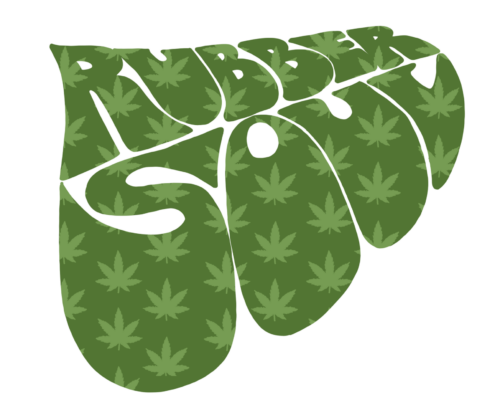
After performing at Forest Hills Tennis Stadium, The Beatles sought some relaxation in the Delmonico Hotel in Manhattan. Bob Dylan entered the suite, one of the group’s lifelong music idols, bearing gifts—a bag of marijuana buds—as he believed the four to be avid smokers. In “I Want to Hold Your Hand,” by The Beatles, Dylan had misheard the lyric “I can’t hide” as “I get high,” and thus was shocked to find that The Beatles seldom used cannabis. “Those aren’t the words,” assistant Peter Brown recalls John Lennon responding, flushed with embarrassment.
Dylan rolled The Beatles their first joint, handing it to Lennon, who then passed it to Ringo Starr, his “royal taster.” Unaware of smoking etiquette, Starr proceeded to smoke the whole joint himself, prompting Dylan’s road manager Victor Maymudes to roll individual joints for everyone else. “We got high and laughed our asses off,” Starr told Conan O’Brien in 2012 in retrospect.
The evening at Delmonico sparked a major shift in The Beatles’ creativity that would produce some of the band’s most celebrated music of the time period. Marijuana shaped the band’s musical choices; “Rubber Soul” signified this transition, and the “pot album” label, despite its accuracy, does not tell the full story.
Before Dylan’s influence, The Beatles’ drugs of choice were uppers. “Till then, we’d been hard Scotch and Coke men,” Paul McCartney once said. After their evening in Delmonico, the band was infatuated with “having a larf,” as they called it. “We were smoking marijuana for breakfast. We were well into marijuana, and nobody could communicate with us; we were just glazed eyes, giggling all the time,” Lennon later said.
“‘Rubber Soul’ was the pot album, and ‘Revolver’ was acid,” Lennon added in a 1970 interview. But this quote is often taken out of context. “We weren’t all stoned making ‘Rubber Soul’ because in those days we couldn’t work on pot,” Lennon clarified.
As Lennon suggested, cannabis did not shape the actual recording process of the album; rather, it was the source behind its mellow introspection and creative risks. “Grass was really influential in a lot of our changes, especially with the writers,” Starr said. “We get to ‘Rubber Soul’ and begin stretching the writing and the playing a lot more.”
“Rubber Soul” marks the time when The Beatles became full-fledged potheads. The 1965 album, however, contains only a few references to the band’s love of the plant. “The Word” is the album’s most explicit ode to weed. The track is less of a love ballad and instead views the word “love” as a symbol for a new kind of living—one described as “It’s so fine, it’s sunshine.”
“You read the words, it’s all about getting smart. It’s the marijuana period. It’s love. It’s a love-and-peace thing. The word is ‘love,’ right?” Lennon said in his 1980 Playboy interview. McCartney mentioned in his book, “Many Years from Now,” that the band celebrated finishing the song with the inspiration itself—having a larf. “We smoked a bit of pot, then we wrote out a multicolored lyric sheet, the first time we’d ever done that.”
“Girl,” which features sharp inhalations during the chorus, is often speculated by fans to be a subtle reference to inhaling from a joint. The song’s production makes the breathing more audible and clear, strengthening this theory.
While other songs in the album don’t contain deliberate references to the drug, they nonetheless pushed music boundaries that previous albums didn’t dare to. “Norwegian Wood” introduced a new instrument, featuring a sitar played by George Harrison, and “Nowhere Man” was the first Beatles song entirely unrelated to romance.
“Rubber Soul” is dreamy, free-spirited, and often considered to mark The Beatles’ transition from “Liverpool boys” to their own men. George Martin, the band’s producer, called it “the first album to present a new, growing Beatles to the world … for the first time we began to think of albums as art on their own.”
While “Rubber Soul” is known as the “pot album,” this label is slightly incomplete. Other factors were just as influential as the drug, infusing the band’s work with more than just THC. For instance, Dylan encouraged Lennon to take a more introspective approach when writing “Rubber Soul’s” tracks. The Byrds’ use of a twelve-string Rickenbacker guitar inspired Harrison’s contributions to “If I Needed Someone” and “Norwegian Wood.” Weed served as a sounding board, a way to create the reflective headspace the band needed to synthesize other influences into their album.
The band members refer to subsequent albums as a progression into different, harder drugs. If “Rubber Soul” is pot, “Revolver” is acid, and “Sgt. Pepper’s Lonely Hearts Club Band” is pure psychedelia. But accounts prove that drug usage heavily overlapped. In his book “Riding So High: The Beatles and Drugs,” Joe Goodden provides a full-length study of the band’s substance usage. “The drug use is often segregated into discrete periods of their career, but really there was a lot of crossover,” he said in an interview with “AllMusicBooks.” Lennon and Harrison had been given LSD-spiked coffee the same year that “Rubber Soul” came out, and McCartney once said, “Do you know what caused Pepper? In one word: drugs. Pot.”
McCartney confirmed that “Got to Get You into My Life” is entirely about pot and appears on “Revolver.” “Magical Mystery Tour,” released in 1967, gives a slight nod to cannabis with its repetition of the phrase, “roll up.” “Fixing a Hole” from “Sgt. Pepper’s Lonely Hearts Club Band” was believed to be about heroin per the title, but McCartney describes it as an “ode to pot” in his biography.
The Beatles would go on to advocate for marijuana legalization, signing a full-page ad in “The Times” declaring cannabis law to be “immoral in principle and unworkable in practice.” McCartney himself provided the £1,800 of funding. Within a week of its publication, the advertisement brought the debate to the House of Commons, helping spark a process that led to reduced possession sentences for Mick Jagger and Keith Richards of The Rolling Stones.
“Rubber Soul” marks The Beatles’ transformation from musical stars to artists with strong cultural influence. The “pot album” label does not come from hotboxing a studio and blowing clouds between verses. “Rubber Soul” instead marks the time when The Beatles gained the courage to unleash their creativity and ideas, both within and beyond the album.
Audrey Adam’s ’27 (audreyadam@college.harvard.edu) guitar gently weeps.
