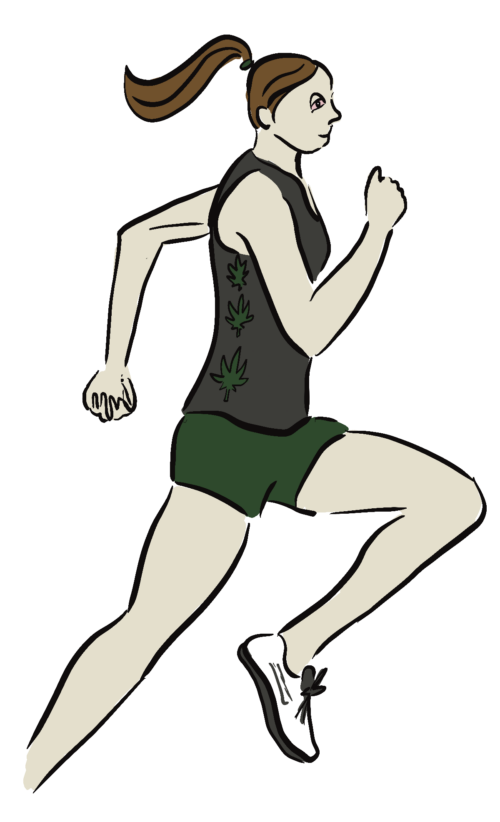
The National Collegiate Athletic Association’s New Era of Cannabis
Graphic by Clara Lake

The National Collegiate Athletic Association has strict regulations that all athletes must follow to compete across all divisions and sports. While ensuring an equal playing field for all athletes, these regulations also ensure athlete health and safety. In 2024, the NCAA removed its ban on marijuana, permitting athletes to use marijuana after a big win, during recovery, or to take the edge off. But despite this policy change, many college teams still restrict the use of cannabinoids during their seasons to strike a professional and social balance.
Before the NCAA decriminalized weed, athletes faced severe penalties for positive tests, including game suspensions and loss of eligibility. While weed is considered an addictive substance, it arguably does not have the same performance-enhancing effects that other substances do. So why were cannabinoids ever restricted? This recent policy change has increased discourse on the positive and negative impacts of marijuana on competing collegiate athletes.
Rolling Stoner: The decision to remove the ban on weed was an important action that increases NCAA athletes’ autonomy outside of their sport. While the choice to use marijuana may be perceived differently in certain environments, it is ultimately a personal decision that any athlete should be able to make. This autonomy is essential for improving determination and discipline.
Moreover, by legalizing cannabis, the NCAA is providing athletes with the chance to balance marijuana’s healing properties with athletic integrity. Scientific research clarifies that weed has pain-relieving abilities, including reducing inflammation. Both CBD and THC, in certain forms, can be taken to target muscle repair and reduce cortisol levels. Surely, this means that next time you see your trainer as an athlete or finish a gym workout, you should enjoy an ice bath and weed pen duo—right?
Sober Sprinter: Though there are positives regarding decreased weed regulations, there are plenty of negatives. Autonomy is not a strong enough reason for the NCAA to reverse its ban on weed. Despite the argument that marijuana improves athletic performance, its impacts on the body and brain, both mentally and physically, put collegiate competitors at a disadvantage. The NCAA’s decision regarding a substance as addictive and popular as weed increases its use, which could negatively impact the professionalism of the Association.
Cannabis’ potential to negatively alter performance is more prominent than most realize: THC can alter motor control and decision-making, as well as increase the risk of lung disease, if weed is consistently smoked. The last thing an NCAA athlete wants is to be exhausted after one rep during practice, struggling during the preseason fitness test, or outrun by the opposition. There are preferred holistic medicines that benefit athletes more than cannabis.
Rolling Stoner: Yet, athletes may find they have exhausted other recovery methods and are now turning to weed as a physical condition and fitness enhancer. Athletes have the right to maximize their potential in any way they see fit. This isn’t an argument over benefit and risk, but rather regulation and choice.
Furthermore, I argue in favor of the improved sleep patterns associated with weed. The collegiate athlete’s schedule entails early mornings, long afternoons, late nights, and draining travel days. Sleep is already hard to prioritize, let alone good sleep. Research shows that cannabis can enhance sleep quality, particularly strains high in THC or CBD, which promote relaxation and reduce anxiety. Instead of popping melatonin before bed, athletes should just try a few weed gummies.
Sober Sprinter: Cannabis is a short-term solution to a long-term problem. Chronic use of weed damages REM sleep patterns, which are critical for emotional regulation, memory consolidation, and cognitive processing. Moreover, relying on weed for improved sleep only increases the probability of personal dependence on the substance. Marijuana is known as a gateway drug—studies prove that early abuse contributes to heightened chances of later legal and illegal marijuana practices. So next time you want a better night’s sleep after a double day of practice, stick with melatonin or just an early night.
Rolling Stoner: Being an NCAA athlete comes with pressures and intensity. The NCAA’s unbanning of weed offers athletes an opportunity to choose if they want to indulge in substances that promote relaxation or happiness. Athletes in professional sports have reported that a joint brings improved mood and a “runner’s high” during or after practice. While many experienced users may not recommend smoking weed before a game due to potential adverse effects on their mental and physical performance, why shouldn’t athletes use marijuana as a cooldown? Giving athletes this autonomy makes their sporting decisions even more meaningful and empowering, allowing athletes to dictate their journey and experience.
Sober Sprinter: The athlete autonomy you base your argument on can be dangerous without proper education and awareness. The bottom line is that weed is an addictive drug, and the risk of addiction and health deterioration it poses does not fit the model of the NCAA and what it seeks to promote: professionalism and sporting excellence. While striking a balance between sports and social life is important—particularly for college students who are navigating their young adult lives—there are levels. Though the NCAA has decriminalized weed because of its lack of performance-enhancing qualities, the Association still prides itself on the health and well-being of its athletes. This, in grander terms, means athletes need to look after their bodies and compete fairly.
The line between competition and social life thins when cannabis is integrated into sports as a mechanism for performance and recovery. The NCAA’s decision to legalize marijuana is thus debated: was it an act of harm reduction or a choice that may heighten substance abuse in a population that requires excellent physical condition? The opportunities that cannabis offers in sports medicine and recovery are still being researched and discovered, in the midst of collegiate athletes having full control of usage outcomes.
Whilst Sober Sprinter enjoys a natural runner’s high, the Rolling Stoner much prefers … being high.