Soundtrack of Violence
Graphic by Annabella Burton

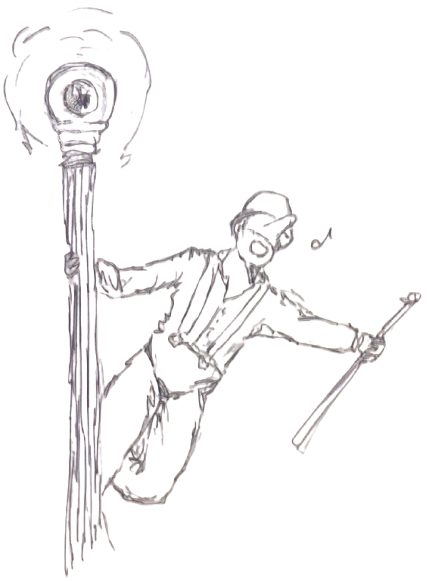
In the 1952 movie musical “Singin’ in the Rain,” protagonist Don Lockwood tap dances down the dark New York City streets in the pouring rain after escorting his love interest, Kathy Selden, to her door and kissing her goodnight. Overcome by joy at their budding relationship, he discards his umbrella, opting to embrace the downpour while belting, “Just singin’ in the rain, / What a glorious feeling, / I’m happy again!” Although the shower soaks his clothes, the dismal weather is no match for his evident bliss. This title number, choreographed and performed by Gene Kelly, has helped the film, about actors adjusting to the transition from silent movies to “talkies,” achieve widespread popularity and acclaim.
Since its initial release, the titular song has been referenced in films and other media in multiple ways. In the 1959 movie “North to Northwest,” a character whistles the tune of the song in the shower, while in the television show “Glee,” characters perform a mashup of the song with Rihanna’s “Umbrella.” Still relevant, seventy years after its release, the film’s most prominent song has persisted as a cultural sensation.
In sharp contrast, the 1972 film “A Clockwork Orange” repurposes the song in a different light. Set in a dystopian Britain, it explores autonomy, government interference, and morality through the story of criminal teen Alex DeLarge. While it began as a novel written by Anthony Burgess, its film adaptation takes several creative liberties under the direction of Stanley Kubrick. Besides adjusting plot points and completely changing the ending, the film departs from the novel by including a performance of “Singin’ in the Rain” by the main character during one of his acts of “ultraviolence.” The scene was initially improvised by Alex’s actor, Malcolm McDowell, on set, and Kubrick then bought the rights to use the song for $10,000.
When Alex and his three loyal followers, the “Droogs,” infiltrate the home of a writer and his wife, they begin their polished routine of violent attack and destruction. As the couple is restrained and gagged, Alex performs his own a capella rendition of the song, engaging in a macabre dance of physical assault. He punches and kicks them repeatedly, with the attacks perfectly coordinated with his euphoric singing of the lyrics. His performance culminates in the ripping of the wife’s clothes and subsequent sexual assault, as the husband, tied up on the floor, is forced to watch.
The combination of “Singin’ in the Rain” with the horrific attack creates a complicated viewing experience. On one hand, the sequence feels choreographed in a way that distracts the audience from the brutality, allowing for a sense of satisfaction in the musical performance. However, any enjoyment the audience feels in hearing the happy lyrics is inseparable from the on-screen violence, implicating viewers as complicit observers. The audience is thus implicated in the victims’ suffering, and this incongruity with music amplifies the horrific nature of potentially enjoying a reference while watching an assault.
Kubrick’s decision to include this subversive use of “Singin’ in the Rain” makes the scene compelling and the film’s larger themes of morality and free will even more successful. On the surface, it is clear that Alex is singing the song because he truly does derive pleasure from participating in acts of violence. From the beginning of the film, the audience understands that Alex’s brain is simply wired in a sociopathic way, as he is shown frequently engaging in and fantasizing about these acts.
However, when Alex is eventually caught and sentenced to prison, he participates in the novel Ludovico technique, which psychologically conditions him to be averse to sex and violence. After undergoing this treatment, the government deems him cured and releases him from prison. Now, whenever he thinks or interacts with these acts that used to bring him so much pleasure, he becomes physically sick. Thus, Alex becomes the morally good, law-abiding citizen whom the audience should theoretically rejoice in. It could be seen as an overall positive outcome that his free will has been curbed, as it will prevent future violent rampages like those seen in the first half of the film.
As Alex navigates coming home, his parents abandon him, and eventually, two of his former gang members, who are now police officers, almost beat him to death. Unable to defend himself, he staggers through the city streets, a shell of his former, albeit violent, self. Although physically he is now forced to be good, there are several moral implications regarding the nature of freedom. Can someone truly be free if they are unable to make autonomous decisions? Furthermore, what constitutes a morally good action: simply the effect or the intentions behind it? Kantian philosophy would argue that morality hinges on intentions and that, without free will, an action cannot be deemed good.
These moral dilemmas persist throughout the rest of “A Clockwork Orange” as the audience witnesses Alex’s continued suffering. When he stumbles upon the home of the couple he previously assaulted, the now-disabled and widowed writer takes him in and cares for him. This is not due to the nature of forgiveness, but rather because he does not initially recognize Alex. When Alex begins singing “Singin’ in the Rain” while taking a bath, the husband discovers his true identity and tortures him as revenge. After a suicide attempt, government authorities discover Alex and take him to a hospital for treatment.
As the film reaches its conclusion, the audience is left grappling with conflicting emotions: disgust for Alex’s past evil acts and sympathy for his current situation. In the final scene, Alex is still in his hospital bed recovering from his physical injuries, but miraculously, he has reversed the effect of the Ludovico treatment. He fantasizes about a sexual scene without the nauseating side effects from before. Looking into the camera, he smiles and declares, “I was cured all right.”
Faced with this conclusion, it is unsurprising that viewers feel relief for Alex and his regained autonomy over his thoughts and actions. Even though this means he has reverted to his original violent state, he regains a sense of free will. In doing so, “A Clockwork Orange” questions the definition of freedom and reestablishes its necessity in our lives. While it seems wrong that violence should make someone want to sing in the rain, judgment may be warranted, but autonomy cannot be taken away.
Even though “A Clockwork Orange” is a film from well before the time of current Harvard College undergraduates, themes regarding free will and the human condition are just as relevant today as they were a century ago. I gained this perspective through taking “COMPLIT 153X: The Cinema of Stanley Kubrick,” a course offered for the first time this spring semester in the Comparative Literature department. Each week at the Harvard Film Archive, I had the pleasure of viewing a Kubrick film on the big screen. Now, I leave the course with a greater appreciation for classic cinema and its ability to confront timeless questions. To all of my peers, the next time you find yourself contemplating what movie to watch in your free time, instead of opting for the newest release on Netflix, I suggest considering the value of an older film.
Taylor Thorne ’28 (taylorthorne@college.harvard.edu) thanks Professor Weir for teaching the class on Kubrick films.