The Hypocrisy of Salem
Graphic by Adriana St. Clair

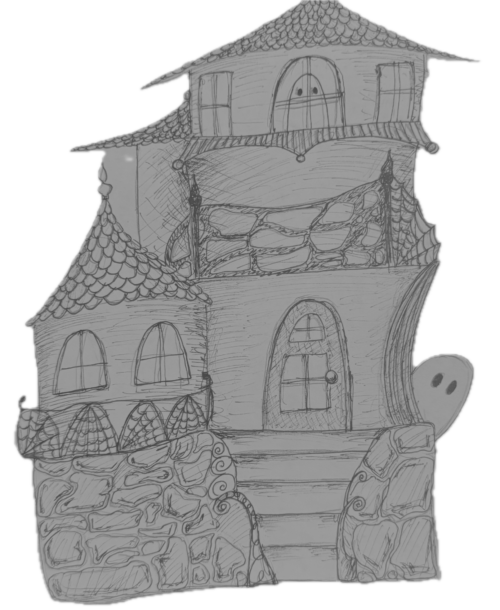
The coastal city of Salem, the setting for the notorious 17th-century witch trials, offers visitors a unique and vibrant experience. The gothic stores, whimsical streets, and eerie homes might make it seem like the city is doing its history justice—but is that really the case?
People have practiced witchcraft since prehistoric times. Where people lived, witches followed. For a while, people valued them as healers, concocting potions and medicine from herbs. People often thought their curses caused bad luck, like crops not growing and disease running rampant. Prosecutions of such practices are estimated to have begun in Europe in the 1400s, as they were seen as an affront to Christianity. However, secular law also made it illegal. These bans were codified, especially in Central Europe, making it easier to imprison and execute alleged witches. However, European witch trials are not as widely known as the American ones—Salem is the most famous.
As witchcraft is based on intention and energy, it is disorienting to see Salem become a hub for capitalist, commodified history. Specifically, modern witchcraft and neopaganism revolve around faith. This makes the practice accessible and welcoming, no matter where you are in your witchcraft journey. Spirituality, as the name suggests, is concerned with the divine, not so much the material world. Witchcraft is also strongly connected to nature. Many practitioners are in tune with the changing seasons and organize their activities and rituals around the moon’s cycle. They utilize water, plants, stones, and crystals. The point isn’t to do anything fancy or extravagant, but to make do with what nature and one’s surroundings offer.
In a picturesque New England town about 30 minutes from Harvard, you can step onto a Hallmark movie set. For a price, of course. On every corner, something beckons your wallet. For $35, you can buy an oversized black shirt that reads, “Witch, please,” in big white letters. The Black Veil, a small boutique, offers candles that smell like different potions. You can buy wax that smells like burnt musk for the chance to befriend the angel of death.
Suppose you bought the wand-shaped corkscrews and magenta witch hats and you began to feel a bit peckish. Fret not! May I offer you a $9 iced latte called the Black Bat, with pumpkin spice syrup and whipped cream? Or, if you are looking for something more substantial, maybe wait 30 minutes for soggy pancakes or grab a $2 sandwich at Trade House.
When we went to Salem, we saw how much it had been commodified. It was ostentatious. It turns out you can buy everything, including history. We paid $15 for tickets to the Museum of Torture, which took only a 15-minute walk through. We saw gory illustrations of execution methods and pale, wax-figure corpses. However, there would have been no way to learn about the history of torture in Salem without going to this museum. There was no informative audio guide that guided us around town, nor were there any information plaques about the land we were standing on. The only way to access the history was through payment.
The commodification of learning history seems present even in old, formerly public buildings. The witch houses and courthouses where the trials took place encapsulate the infamous, haunting tales. However, going inside the houses and museums costs us about $12 per person, even with a student discount. The line for the building was about 10 minutes long.
Of course, tourism is quite an important source of income for Salem and its locals, with the industry making over $99 million per year. On the other hand, the commodification of Salem’s history goes against the core beliefs of witchcraft itself, which are rooted in unbridled accessibility.
The victims of the trials were a total of 17 women and seven men. The first woman executed in the trials was financially independent and outspoken. Bridget Bishop ran her own tavern, married three times, and wore clothing that was considered inappropriate in Puritan society. Similarly, Abigail Hobbs was a rebellious adolescent who refused to go to church.
Most of the victims were women, many of them independent and spiritual. They did not conform to Puritanism, a belief system with much ingrained prejudice against women. Women were even deemed as naturally more sinful than men. This part of Salem’s history shouldn’t go unnoticed.
So what is the legacy of Salem? Has it really become all caramel apples and merchandise shops? Where did the legacies go? Only an estimated 25 people died as a result of the witch hunts, yet the story has remained one of the most prevalent horror tales in American history. Most schools teach it. Countless academic fields are devoted to the era of witch hunts. Of course, some places still honor the history in a meaningful way—including the Salem Witch Museum, the Witch House, and the Peabody Essex Museum.
But there is also something deeper. The history has not dissolved, nor has it disappeared. Unsolved history makes its voice known, even if muffled. The voices of the burned. The screams of the wrongly accused. The cracking of the fatal flames. Something unmistakably sinister lurks behind the strip shops of Salem. It is pungent and intoxicating, and if you listen closely, if you block out all the tacky modernization, you might just find it.
But don’t take my word for it. See for yourself. It’s only 30 minutes away. And a few hundred years back.
Naomi Beinart ’30 (naomibeinart@college.harvard.edu) and Delfin Urundul ’30 (durundul@college.harvard.edu) went to Salem together, where Delfin was intrigued by the witchy elements, and Naomi wanted to go to the Museum of Torture.