A Critique of Cuffing SeasonFree yourself!
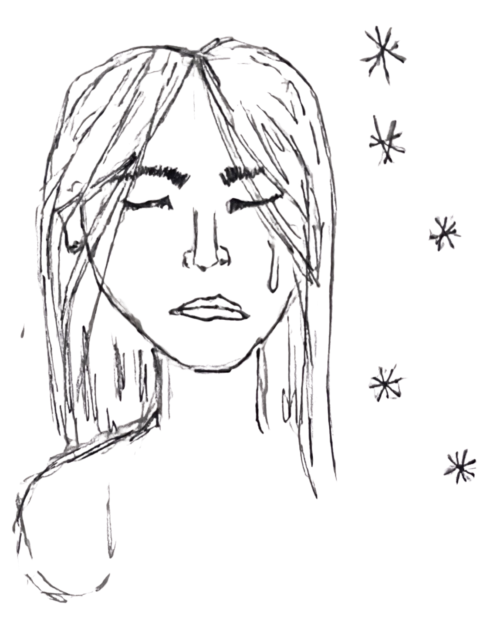
Graphic by Annabella Burton

As the weather cools and the leaves begin to fall, Instagram can’t help but circulate images of couples’ costumes, matching pajamas, and baking dates. At first, the images seem sweet and innocent. After all, what’s wrong with Hallmark-movie romance during the coziest months of the year?
But these seemingly innocuous trends deserve a closer look. The idea that winter is not complete without a relationship points to something bigger: a culture that teaches everyone to feel incomplete without a partner.
Cuffing season is not about the weather; it’s about how society has taught us to treat being picked as a goal in itself. A life without a partner is framed as the worst-case scenario, but what we should really fear is a life without purpose or self-fulfillment.
Romance is not inherently bad, but romance born out of wanting a relationship, rather than wanting a person, causes us to stop putting energy into passions, friendships, and the things we care about. Left unchecked, that kind of romance transforms into an unhealthy fixation. Cuffing season teaches us that the fixation is not only normal but expected during certain months of the year. It’s time to stop waiting to be picked.
From a young age, romance is framed as the reward. Movies, songs, and social media often end when the couple gets together. But a story that ends after “being chosen” says nothing about who you are after the credits roll. The term “cuffing season” describes the cold season when everyone is coupled up or seeking to be. The language surrounding it (“cuffed,” “locked in,” “secured”) frames the goal as claiming a person, which is incongruent with the bones of a healthy relationship. The word gives itself away: to be cuffed is to be restrained, held in place, kept, sometimes unwillingly.
Women in particular are conditioned by society to understand their value through male validation and romantic attention. That societal conditioning teaches women that their “value” rises when they’re chosen, and that single women are “left over” or desperate, permanently in search of a relationship.
This logic turns a woman into the object of another person’s choice rather than the subject of her own life. Being picked is passive; it happens to you, not because of you. Choosing, whether it is a person, a passion, or yourself, is something you control.
This is where the real problem with “cuffing season” lies. Social conditioning, which treats romance as the pinnacle of one’s life experience, crowds out the love and joy that come from investing in ourselves. Focusing on your own passions and goals creates space to nurture yourself. Without that, you lack a focal point for knowing yourself beyond how others perceive you, making finding a partner the only way to feel validated. We see ourselves solely through the eyes of whoever chooses to see us.
Winter is a cold, dry, and sometimes lonely season. With chilling temperatures, there is less going on outside and more time is spent indoors, leaving an emptiness that could be filled by reading that book you’ve been meaning to pick up or finishing that long-overdue assignment, but is instead open to intrusive thoughts like, What if I snap them?
Cuffing season steps into that silence and offers a short, easy, and comforting answer: fill the emptiness with a person. A person cannot do the work of a purpose. The loneliness of winter is not a sign that we need someone else, but rather a sign that we may need ourselves.
When was the last time you did something alone? When was the last time you did something just for you? Doing things by yourself is not only good for building a self-concept, but it’s also great for your mental health, and it reminds you that you matter without anyone’s approval.
Often, pining for a relationship leads to one that isn’t right for you. Convincing yourself that you will be unhappy until you’re dating someone treats a relationship as something to be acquired rather than experienced. Misery loves company, and the company misery finds is rarely the company we would choose if we felt whole. Two individuals trying to fill a space within themselves often end up sharing the same problems rather than solving them. And when spring has sprung, and the relationship is out of season, we’re left exactly where we started, only now convinced we were left behind.
When your life is full, romance becomes something you add to it, not something that you need to feel complete. A full life is not defined by a kiss count or how many “I heart my boyfriend” t-shirts you have, but by the friendships and passions that make you who you are. These are real relationships in and of themselves, and unlike many “cuffing season” flings, they don’t end in March. They ask more of us than waiting around; they ask us just to show up.
Some will raise the fair argument that wanting someone to cozy up with by the fire is just human. And they’re right. Wanting human connection is natural. The critique of cuffing season doesn’t claim that humans don’t want connection, but that it pressures us to treat being picked as the end goal. There is a difference between wanting to share a life with another person and needing someone to give your life meaning. Romance should come from a full life, not substitute for one.
This winter, pick yourself first. Being picked was never the point; choosing is. The beauty of choosing a life that is defined by what you love is the freedom to experience everything this holiday season has to offer for yourself and the people you care about. Bring back the matching pajamas and baking dates—this time with friends, or on your own, no cuffs required.
Anika Gupta ’30 (anikagupta@college.harvard.edu) and Salma Gheith ’30 (salmagheith@college.harvard.edu) would rather be handcuffed to each other.