Dodo Birds in Boston?
Graphic by James Foss

“On GPS: Jurassic Park … in real life?”
“I Have Something to Say: ‘Khaleesi’ Is a Bad Name for a De-Extincted Dire Wolf.”
Since it was founded in 2021, Colossal Biosciences has found itself in the headlines. The company claims to be “the most prominent name in de-extinction,” a practice that seeks to bring back animals that once called habitats around Earth home. Today, people often recognize the dodo bird, the thylacine (Tasmanian tiger), and the moa as animals lost to history—but Colossal sees a future where these animals can return.
Harvard professor and geneticist Dr. George Church founded the company with entrepreneur Ben Lamm in 2021. Since it started five years ago, the company has reached a valuation of over $10.3 billion, after its most recent fundraising round. Although the company is based in Dallas, it also operates two labs in Boston—including Church Lab at Harvard—and one at the University of Melbourne.
Amid the growing publicity around the company, the “Harvard Independent” spoke with Colossal’s Chief Biology Officer, Dr. Andrew Pask. Pask officially joined the company in 2025 after previously serving in an advisory role. He has dedicated much of his research to the thylacine, publishing the animal’s full genome in 2017. Now he oversees global developmental biology strategies across all de-extinction projects.
Even with his role overseeing the company’s biological work, Pask spoke specifically about his continued passion for de-extincting the thylacine, a passion that brought him to Colossal. “So we annihilated [the thylacine], and now that entire ecosystem is collapsing. So all the species [in Tasmania] are now moving through various stages of becoming endangered or critically endangered,” he explained.
In Tasmania, Australia, over 650 plant and animal species are considered “threatened.” Colossal argues that because Tasmania and other parts of Australia lost their “apex predator,” the ecosystem’s balance has been disrupted. Experts often call this phenomenon “trophic downgrading.” Specifically, in regions where the apex predator has been lost, “cascading” negative effects ripple through lower levels of the food chain. In the case of Tasmania, Colossal points to the emergence of Tasmanian devil facial tumor disease as an example of this concept.
“They have emerging strange diseases because you don’t have an apex predator. That’s really important for maintaining balance in those ecosystems, and so we know that we’re going to lose a lot more species if we don’t have this [animal] back in its niche,” Pask said.
Colossal certainly has made massive inroads into de-extinction. However, roadblocks still exist: one of the biggest is genome engineering. “We have to be able to edit genomes en masse. We’re talking thousands, if not hundreds of thousands, of edits that we need to make concurrently, so that we can re-engineer a lot of these really complex genomes that we’re trying to rebuild,” Pask said. “That’s something that George Church has been an absolute pioneer in. So he has been really driving the field of multiplex gene editing.”
The other companies in the multiplex gene-editing space are mainly in the pharmaceutical industry. Colossal outlines other companies researching and working in de-extinction; however, other businesses, such as Boyalife and Cellectis, pursue de-extinction and work on animals as a division of their companies or as an application of their technologies. George Church and the team at Colossal have been major drivers of this niche of gene editing.
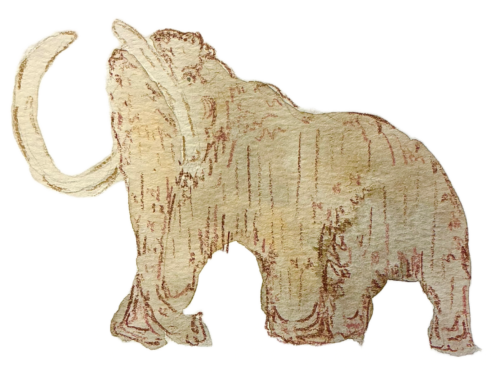
The other roadblock comes after the genetic stage: embryo development. For example, the lab may have a woolly mammoth specimen, but growing it into a living animal is a different equation. “When we’re working on critically endangered species, you’re not always going to have a good surrogate animal that you can use to generate your particular animal that you want to make,” Pask explained.
“And so if we can do artificial wombs, that would be enormously helpful and beneficial for conservation science,” he continued. “It’s incredibly complex, the way that an embryo develops inside a uterus. Most animals have a very complicated placenta structure that has to really embed into the uterus where it’s getting nutrients and blood supply from mum.”
The applications of creating an artificial womb go far beyond the realm of de-extinction and endangered animals. “Things like preterm birth are a big issue that we have in humans—and the outcomes for those babies that are born very prematurely [are] not great,” Pask shared. “If we could improve how we would be able to put those babies, not into a humidity crib, but into an artificial womb to continue their development, there’s a lot of applications that you could have for that particular technology.”
Different birth methods exist across animal species; most of the projects on Colossal’s website that would require artificial gestation fall into three types: placental mammals, marsupials, and oviparous species. First, placental mammals would utilize an artificial womb, which, as Pask discussed, often requires long development periods. Second, marsupials would also use an artificial womb; however, because their gestation period can be as short as two weeks (before moving to a pouch), the artificial wombing process may be easier. Last are egg-bearing species, for which Colossal announced a breakthrough on May 19, 2026, when they successfully hatched 26 healthy chickens.
Despite the benefits Colossal claims for its technologies, many critics still ask why the company receives such significant funding as today’s animals move towards extinction. In 2017, when Church’s lab announced its ability to de-extinct the woolly mammoth, David Schulz in the “Science Journal” pushed back on the plan.
“The cost of caring for a population of resurrected mammoths, for instance, should be similar to the cost of caring for the endangered Asian elephant,” Schulz wrote. “The approach completely ignores the large up-front cost of developing and using the genetic and biological technologies to actually resurrect the species.”
Pask questioned why focusing on endangered versus extinct animals needed to be a choice. “This is not an either-or. This is an and situation,” he said. “The work that we do for de-extinction science is building new tools that we need to save those species on the brink of extinction, and we’ve never had the funding and the critical mass to develop those tools before.”
Pask continued by giving an example of how their biological work on extinct marsupials has supported efforts with endangered ones today. Pask spoke specifically about their efforts to save the endangered northern quoll, a small marsupial about the size of a large rat. “We developed really refined technologies for genome engineering in marsupials,” he said. “That’s something that we need to do to rebuild the genome of [the thylacine], but an immediate conservation application of that is with the northern quolls. So that is a species of marsupial that is one of our most critically endangered.”
“But when we look at why they’re dying, they’re dying because [humans] introduced a pest species called the cane toad into Australia. It’s a toxic toad species. Our animals have no defense against them. They eat the toad, and [animals such as the northern quoll] just die.”
Colossal identified the cane toad’s native habitat in South America and deduced the genetic modification that allows its natural predators to consume it without reacting negatively to the toxin. “It turns out it’s one single nucleotide in a three-gigabase—a three billion base pair—genome that you need to change to give that animal then cane toad toxin resistance,” he continued. “It’s a single edit that we can make to save a species, and that’s a tool that we wouldn’t have had if we weren’t working on de-extinction science.”
Colossal Biosciences has multiple well-publicized plans, but many do not include a specific timeline. Pask uses the familiar thylacine to show what Colossal’s de-extinction future could look like. “The closest living relative to the Tasmanian tiger has about four and a half million differences in its genome to the Tasmanian tiger genome,” he explained. “We’re predicting it would take around 10 years to make all of those edits. But that technology is improving all the time, so we’re working on ways of really scaling that up.”
Pask also brings up the woolly mammoth as a case on the other end of the spectrum; it has a less complicated genome, but the development is much more challenging. “Asian elephant[s] and Mammoth[s] are actually really closely related. In fact, the Asian elephant is more closely related to mammoths than it is to African elephants, which is a mind-blowing statistic, right?” he asked. “Gestating a mammoth takes 22 months. You’ve got to have a herd of elephants that you can transfer embryos into. We don’t understand an enormous amount of reproductive biology in elephants.”
While many large-scale projects have five- to 10-year timelines, Pask said others with closer relatives will come sooner. Pask explained that projects such as the dire wolf and the bluebuck require far less genome editing and could be born through surrogacy with closely related animals.
Smaller projects like the dire wolf, Pask explained, are more of a proof of concept for other work than projects slated for release into the wild. “We’ve got the three dire wolves at the moment, but the real application of that technology was for red wolves, so they’re the most critically endangered wolf population in the world from North America, and we knew that they were really struggling with genetic diversity,” Pask explained. “This was a way of conserving red wolves and developing new technology for canidae species that had never been developed before.”
Colossal Biosciences is certainly on the radar of geneticists, biologists, and investors alike. Meanwhile, for students at Harvard, it may be just another lab on campus making huge inroads into a scientific field they have never heard of. “Harvard has been a massive innovator. George’s lab, like I was saying before, in multiplex genome engineering, in large-scale DNA synthesis,” said Pask.
However, for Jurassic Park fans, there is no hope for a dinosaur-filled future. “I love Jurassic Park, but there’s no DNA left in dinosaur bones, so it just doesn’t last that long,” Pask explained. “Well, they’re all fossils anyway, right? But there’s no DNA there, so there’s no way to use this technology to de-extinct a dinosaur, unfortunately.”
Despite Pask’s explanation that there is no future for dinosaur de-extinction, the team at Colossal believes there is a future in which the millions of passenger pigeons that once populated the Midwest will fly again, where woolly mammoths can bring life back to the parts of the Arctic that are losing permafrost; a future where humans can “[right] an anthropogenically induced wrong.”
For a burgeoning company, Pask is interested in recruiting young talent. “I think it’s an incredible place for students,” he said. “Whether you’re in the life sciences, whether you’re in computational biology, whether you’re in physics, all of these things are being covered. Engineering, all of these things, are critical to us building these platforms.”
Kalvin Frank ’28 (kfrank@college.harvard.edu) is excited about Colossal’s future.