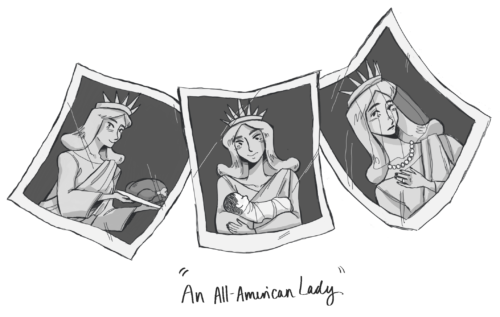
“The Way We Never Were:” On View at the Harvard Art Museums
Graphic by Taylor Bierwerth

“The Way We Never Were” is a photography collection on view at the Harvard Art Museums from Aug. 29 to May 9, 2027. This exhibition features an archive selection assembled in the 1970s by sociologist and curator Barbara P. Norfleet, who earned a PhD in social psychology from Harvard University in 1957. Alongside her archival project, Norfleet was continuously involved with Harvard as a teacher, photographer, and curator. The full archive includes over 20,000 photographs from professional photography studios spanning the late 19th century to the 1980s across the United States, though most are from the late 1930s to the early 1960s. Audrey Sands, Madison Brown, and Bridget Hinz curated this exhibition.
American post-World War II commercial photography was largely defined by its power to shape public perceptions of American culture—put bluntly, a heteronormative, comfortable, structured, and unified suburbia. Through magazines and promotional images, professional photographers created a highly fictionalized yet nostalgic image of “American culture.” They did this by specifically documenting and promoting consumer products, staging photographs of “daily life,” and celebrating the triumphs of post-war America.
However, when these meticulously curated photographs are placed in their more specific cultural contexts, many inconsistencies and contradictions with reality begin to emerge. One photograph depicts a “Tupperware party,” featured in advertisements for the new polyethylene product that is “The best thing that’s happened to women since they got the vote!” While it was promoted as an improvement for women’s lives and a way to reduce waste, many would argue that these notions also kept women in the kitchen and promoted mass consumption of plastic. To give another example, in a time when sex was highly stigmatized and birth control was not yet available, photographs of newborn babies circulated in U.S. Public Health Service reports to construct a narrative of postwar domestic expansion.
These photographs not only contained inconsistencies, but they also actively masked systemic issues and cultural diversions in an attempt to create a pure, unified image. “Postwar domestic expansion” was lauded at the same time as American eugenics and the forced sterilization of Native American, Mexican, and Black women, as well as other marginalized groups. Photos of family-friendly youth play and socialization were put forth to codify acceptable teenage behavior out of fear of juvenile delinquency.
As we examine our past, these joyful images, built to characterize the post-war decades, actively mask the social and political tensions of the time. From the Civil Rights Movement to presidential assassinations, American life was far from the pictured stability and uniformity. However, the invention of the camera and its widespread adoption led to some of humanity’s most active engagements with nostalgia and memory. It may not have always been a conscious choice to memorialize stability over hardship but rather a product of wanting to capture our happiest moments.
The Origin of the Exhibition and its Ethos
I had the privilege of speaking with Audrey Sands, the Richard L. Menschel Associate Curator of Photography at Harvard Art Museums, about her experience curating this exhibition. “The Way We Never Were” is Sands’ first proposed exhibition with Harvard Art Museums, and it comes from an extended process of examining the photography collection of the Museums and thinking in conversation with the history of photography in fine art museums across the United States.
Sands’ goal in curating “The Way We Never Were” was to explore new ways to introduce existing permanent collections to the gallery space. The American Professional Photographers Collection, curated by Barbara Norfleet, lies within the larger mass of 90,000 photographs housed at the Harvard Art Museums. Although a quarter of the collection is Norfleet’s archive, it has not been examined as a whole since leaving the Carpenter Center and coming to the Fogg Museum (the oldest and largest part of the Harvard Art Museums) in 2002.
This archive is deeply tied to the history of visual arts and photography at Harvard. The Carpenter Center preceded other museums in its interdisciplinary and inclusive engagement with photography, thanks to Davis Pratt, the photography curator from 1965-1972, and Norfleet. The initial photography teaching collection consolidated multiple smaller collections that focused on social documentation. This treated photography as both an art form and a scientific or historical analysis, a practice radically ahead of its time. This duality called into question ideas of “cultural memory” and “collective consciousness,” and how artists largely crafted them.
Barbara Norfleet led the photography program and collection at the Carpenter Center from 1972-2002. During this time, she traveled the country between 1975 and 1977 to gather prints and negatives from the attics and basements of more than 25 professional studios. This large collection helped characterize the Carpenter Center and differentiate it from other museums, and therefore it was with Norfleet’s retirement in 2002 that the teaching collection as a whole, consisting of over 10,000 prints and 40,000 negatives, moved to the Harvard Art Museums.
However, despite the size of Norfleet’s archive, it struggled to fit neatly into conventional photography exhibitions. Thus, it found few opportunities to enter the main gallery spaces of the Harvard Art Museums.
Because photography, after its invention, was quickly adopted across fields—scientific, legal, personal, and professional—the art world saw it as a threat to, or “less than,” the fine arts exhibited in museums. Thus, for a long time, museums didn’t actively curate photography, and only in the 1970s, after years of advocacy by curators and practitioners, did they start building photography collections. Even within the “fine art” sphere of photography, this usually meant edgy, experimental pieces by “fine artists,” not the everyday personal, professionally hired photographers who captured the images in Norfleet’s archive.
Even though these professional photographers still had personal style and strong artistic merit, because of the widespread notion that fine art was specifically “art for art’s sake,” for many years family portraiture or images created for advertising were seen as far below and less aesthetically interesting and unique, preventing photography from being considered meaningful fine-art.
“What was populating these collections was work by named, iconic individuals who were seen to have pushed forward the art history of photography,” said Sands.
In contrast, Norfleet, who trained in sociology alongside photography, focused on images that permeated everyday life in advertisements, magazines, and family portraiture. Thus, Sands worked to draw attention to this particular thread of photography, examining it and the tension it holds with what we consider as “fine art.” She examined the collection as a whole to determine how best to present it to the public.
“It has to be something we breathe new life into … It cannot just lie dormant,” she stated.
This exhibition, which occupies only a single bay in the Harvard Art Museums’ special exhibition space, reaches across the United States and showcases a wide range of social phenomena over time. Through this multidisciplinary approach to photography, which combines history, science, and art, Harvard’s archival wealth comes to light.
She explained that a major goal is to advocate for making art and art history accessible, making the museum’s holdings transparent, and allowing viewers to connect with the works.“We really try to look at what holdings, what deep pockets really characterized our collections and make us distinct from other museums,” she described.
The timeliness of the exhibition: why now?
Sands described how, while the photographs themselves are a narrow and idealized representation of “American life,” grounded in white suburbia, the goal in curating the exhibition was to offer new entry points into the collection.
“The task at hand is to think about how we present this collection that is filled with extraordinary and bizarre pictures that are joyful, humorous, and troubling to look at while we also present them in a way that complicates how we look at them and provide a number of pathways for visitors to look at them,” Sands said.
In an art world that often tells viewers what they are looking at and how to look at it, this exhibition offers an opportunity for individuals to reflect on the cultural context of the country they stand in and to connect with the exhibit on multiple fronts.
“Each piece comes from a cultural context of protest, of violence, of loss, of environmental degradation,” Sands described, but also from an attempt to codify American life, ritual, and social identity in a way that is playful and nostalgic, directly following a period of time that was so hard on U.S. citizens. The exhibition encourages viewers to participate in broader national conversations about how we remember our past and treat our history.
Norfleet’s archive began in 1975 with a National Endowment for the Humanities research grant, which allowed her to begin organizing the collection at Harvard. This time marked the 200th anniversary of the United States, and it featured a lot of cultural looking back that mirrors us at the 250th anniversary. Sands brought up questions regarding patriotism and “American culture” that the exhibition is infused with: “What does it mean to celebrate this nation that is so deeply divided? Can there be a cohesive picture of who we are? What makes an American individual or society?” Each question requires dual perspectives and a conscious effort to enter these “seemingly objective ways of telling.”
Looking back further, the art and craft of photography emerged from the camera’s first technological inventions and its ability to “capture reality,” as it were. In the art world, technology has long been a source of influence and inspiration, but also a point of tension, as it highlights issues of accessibility and class divide. This has begun to change in recent years. Whereas in the 1950s only trained professionals could manually paint and alter photographs, that process has become much more accessible. Social media has become a breeding ground for beauty standards and for opportunities to “perform” and “improve ourselves” for the camera, social perception, and memory.
Looking back at our history, we can see that throughout art, literature, and science, humanity has long faced this tension between capturing reality and altering it.
All in all, this is an amazing exhibit with playful, iconic photos that evoke a complex American history beneath its stereotypes and ideals. It is a unique part of Harvard’s incredibly robust collection, engaging multiple fields and encouraging viewers to take one or more of the many pathways into the perception world that connects past and present.
Sam Park ’29 (shpark@college.harvard.edu) would like to thank Audrey Sands and Jennifer Aubin, assistant director of media relations in the Harvard Art Museums, for helping organize this opportunity for the “Harvard Independent.”